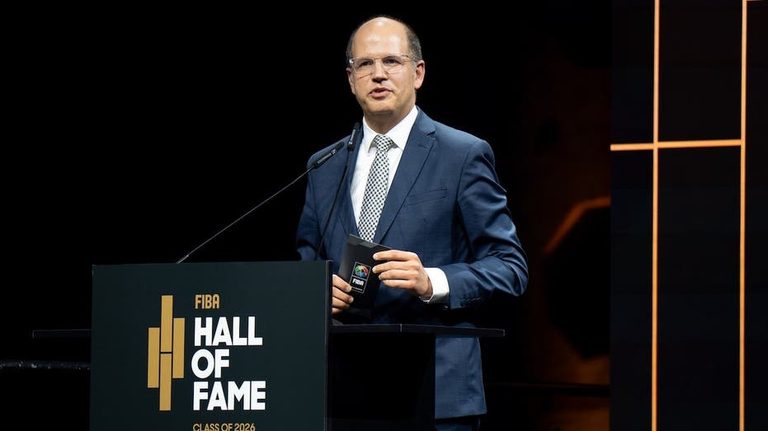


At a press conference on the eve of the 2026 FIBA Women’s Basketball World Cup, FIBA Secretary General Andreas Zagklis addressed why the federation has not added the word “men’s” to the title of its premier senior tournament. He explained that the Central Board has chosen to retain the current naming – simply “FIBA Basketball World Cup” – because the organization does not view the distinction between men’s and women’s events as a value judgment that elevates one over the other.
Board’s rationale for the naming
“The naming is of course a matter that the Central Board has discussed,” Zagklis told reporters. “The Central Board has for the moment maintained the current naming. We do not see that the aspect of men’s and women’s is something that devalues or values the other World Cup in such a way.”
Broader eligibility concerns
Zagklis added that FIBA is also weighing “broader concerns” about how athletes are classified for competition. He referenced ongoing studies that examine who can compete in the women’s World Cup and who can compete in the other World Cup, which is not necessarily limited to a men’s event.
While he did not name transgender athletes directly, FIBA has publicly confirmed that it is reviewing eligibility rules for transgender participants. The federation is following the International Olympic Committee’s policy that protects the female category and is awaiting further guidance on legal and operational details.
Timeline for a formal policy
In December 2024, the Central Board extended its process for adopting a formal transgender eligibility policy by two years. A Gender Eligibility Committee, composed of medical and legal experts, is slated to present recommendations to the Central Board at the start of 2027. Until then, FIBA will not entertain individual eligibility requests, meaning no permanent policy has been announced for its competitions.
Comparison with the WNBA
The discussion comes as the WNBA faces its own eligibility debate. The league’s collective bargaining agreement limits play to women, but it has not defined the term or set specific standards for transgender or intersex athletes. Recent comments from Indiana Fever guard Sophie Cunningham, who advocated excluding transgender women and girls from female sports, sparked demonstrations on both sides of the issue outside WNBA games.
Former NBA players Enes Kanter Freedom and Royce White have publicly declared themselves eligible for a future WNBA draft after identifying as women, actions many view as challenges to the league’s eligibility language. A WNBA task force discussed the matter in August but did not adopt a new standard, stating that no immediate eligibility case required action.
What the naming decision means for fans
By keeping the tournament name gender‑neutral, FIBA signals that it views both the men’s and women’s World Cups as equally prestigious. The federation’s ongoing data collection and expert review aim to ensure fair competition while respecting the integrity of women’s sport.
Fans can expect the 2026 Women’s World Cup to proceed under its established title, while the senior men’s tournament will continue to be known simply as the “FIBA Basketball World Cup.” As the Gender Eligibility Committee prepares its recommendations, the basketball community will watch closely for any policy shifts that could affect future participation.
Original reporting: Fox News (HLL/CB) — read the source article.