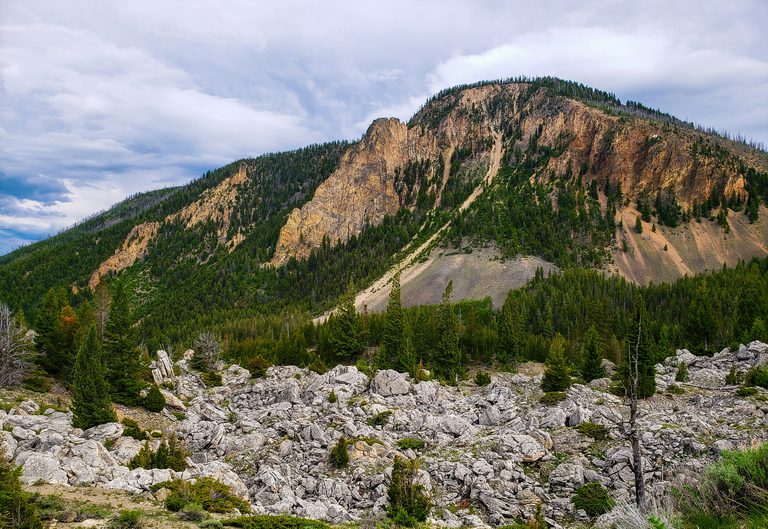
On June 23, 1925, a dramatic geologic failure reshaped northwest Wyoming’s Gros Ventre Range. An entire side of Sheep Mountain gave way, sending roughly 50 million cubic yards of rock, soil and trees roaring down the mountainside in less than two minutes. The slide, one of the largest ever recorded in North America, was triggered by a perfect storm of heavy spring snowmelt, intense rain and a modest local earthquake that saturated weak clay and shale layers beneath slipping sandstone.
Immediate impact
The avalanche of debris piled up to 200 feet deep across the valley, damming the Gros Ventre River and creating what is now known as Lower Slide Lake. Remarkably, no one was killed in the initial slide, and the scar on the mountainside remains visible today.
Aftermath and the Kelly flood
Two years later, on May 18, 1927, continued snowmelt caused the swollen Gros Ventre River to breach the natural dam formed by the landslide. The resulting flood surged downstream, destroying the town of Kelly, located four miles (six kilometers) below the dam, and claiming six lives. Rancher Guil Huff, who survived the initial slide, provided a firsthand account to geologists studying the event, describing how narrowly he escaped the rushing debris.
Lessons learned and modern relevance
The 1927 Kelly flood offered a crucial lesson that later helped engineers avert a similar disaster after the 1959 Madison Slide, which followed the M7.3 Hebgen Lake earthquake. By constructing a spillway to lower water levels in the newly formed Madison River lake, officials prevented a repeat of the catastrophic dam breach.
Today, the Gros Ventre River valley and surrounding Yellowstone foothills remain geologically active. The region’s steep slopes, young mountains and relatively weak rock formations mean landslides are an ongoing risk. Residents, landowners and local officials continue to monitor water levels and river flow, especially during spring melt, to mitigate potential hazards.
Why the story matters to Wyoming families
Understanding the historic landslide and flood underscores the importance of preparedness for families living in mountainous areas. It reinforces the need for strong community ties, vigilant stewardship of natural resources, and respect for the power of God‑created landscapes. By learning from past events, Wyoming’s citizens can better protect homes, farms and cherished traditions that form the backbone of our state.
Further reading
For more details on the Sheep Mountain landslide, the Kelly flood, and ongoing geologic monitoring efforts, visit the original article linked below.
Original reporting: K2 Radio (Casper) — read the source article.