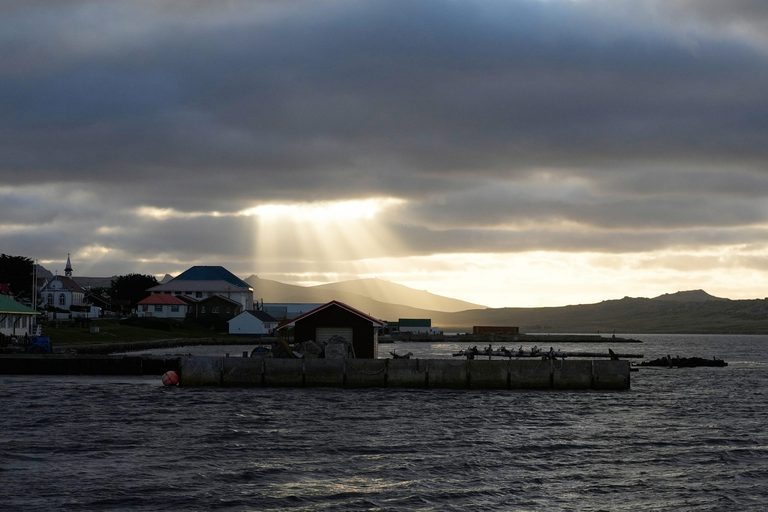
BUENOS AIRES — An Argentine federal court issued an injunction on Wednesday that stops British and Israeli firms from advancing the Sea Lion oil development north of the Falkland Islands. Judge Mariel Borruto’s order requires a full environmental review before any drilling, offshore structures, or port work can proceed.
Legal move adds new front to a decades‑old dispute
The injunction targets the Sea Lion project, located about 220 kilometers (140 miles) from the British‑controlled archipelago. While the order formally bars further work, enforcement will depend on the cooperation of the two companies involved – Israel’s Navitas Petroleum and Britain’s Rockhopper Exploration – both of which have said they will continue with the project despite the judge’s warning.
Rockhopper declined to comment, and Navitas did not immediately respond to a request for comment.
Economic stakes for the islands and Argentina
Commercial production from Sea Lion is slated to begin in 2028. For the roughly 3,500 island residents, the oilfield promises a major shift from a fishing‑based economy to one bolstered by hydrocarbon revenues. For Argentina, which refers to the islands as the Malvinas, the project represents foreign extraction of resources the nation claims as its own, a claim enshrined in the Argentine constitution and woven into national identity.
Trump’s comments stir diplomatic uncertainty
U.S. President Donald Trump, a close ally of Argentine President Javier Milei, has recently suggested Washington could reconsider its historically neutral position on the islands. Speaking in Dublin, Trump expressed doubt that Britain would be willing to retake the Falklands, saying, “I don’t know if they’re going to be willing to travel that far.”
Milei seized on Trump’s remarks, calling them a “wind of change” and announcing a package of measures aimed at companies operating around the islands. He warned that the projects pose a “clear and urgent danger” to Argentina’s sovereignty claim and pledged to use “diplomatic, economic, judicial and legal tools” to defend it.
Sanctions and criminal complaints
The Milei administration is drafting legislation to broaden sanctions against firms involved in the oil projects and has filed three criminal complaints against Navitas and nine other companies, accusing them of violating Argentine law by pursuing oil operations without proper authorization. The impact of these legal actions on the Sea Lion project remains unclear.
British response and local sentiment
The British government responded by reaffirming that the islanders should determine their own status, citing the 2013 referendum in which residents overwhelmingly voted to remain a British territory. A British statement warned that Argentine domestic law does not apply within the islands.
The injunction originated from a separate civil lawsuit filed by environmental lawyers and veterans of the 1982 war, who argue the project threatens marine ecosystems through chemical pollution, underwater noise, increased ship traffic, and potential oil spills. Judge Borruto warned that allowing drilling could cause irreversible damage to the marine environment.
What’s next?
While the legal order adds pressure on the developers, the practical effect may be limited unless the companies’ home governments intervene. The dispute highlights the broader geopolitical tug‑of‑war over the Falklands, a flashpoint that continues to involve regional leaders, foreign investors, and now, the United States.
Original reporting: Alexandria, VA News – WTOP News — read the source article.