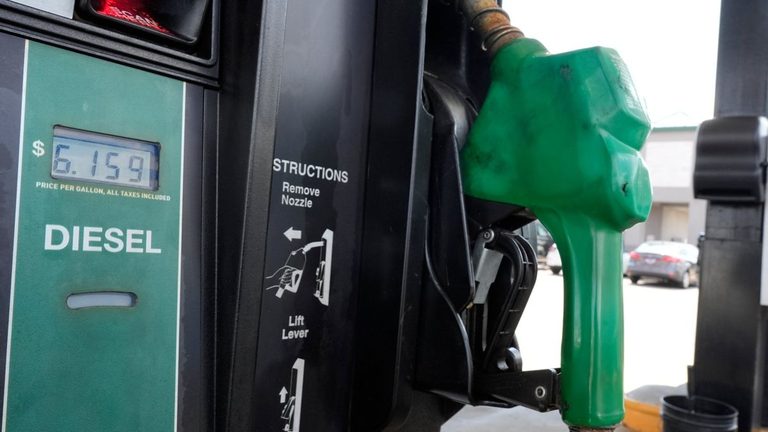
North Carolina drivers are feeling the pinch at the pump. As of Wednesday morning, the average price for regular unleaded gasoline jumped to $4.12 a gallon, an increase of about eight cents overnight and nearly 22 cents over the past week, according to AAA data. Diesel fuel, already a burden for farmers and freight operators, averaged $6.09 per gallon across the state.
Local impact
Prices are highest in the Triangle and Wake County, where stations reported averages of $4.14 per gallon for gasoline. A Cary station visited by WRAL News was selling regular unleaded at $4.29 per gallon, underscoring the strain on commuters and small‑business owners alike.
For North Carolina’s agricultural sector, the surge in diesel costs is especially concerning. Farmers rely on diesel‑powered equipment for planting, harvesting, and transport, and the new all‑time national record of diesel above $6 a gallon threatens to erode profit margins.
National context
Across the United States, diesel prices have risen to $6.31 per gallon, roughly 40 cents higher than a week ago and about $2.60 above the same point last year. Gasoline averages $4.36 per gallon nationally, according to GasBuddy analyst Patrick De Haan, who warned that both fuels could climb further in the next 48 hours.
De Haan attributes the upward pressure to renewed geopolitical instability. Ongoing conflict in the Strait of Hormuz, combined with the United States’ war with Iran and Russia’s war in Ukraine, has disrupted global oil supplies and pushed Brent crude to nearly $108 a barrel – $17 higher than the August average.
President Trump’s response
President Donald Trump addressed the fuel crisis last week, calling on Ukraine to halt strikes on Russian diesel facilities until Russia agrees not to target its own critical infrastructure. Ukrainian President Volodymyr Zelenskyy indicated willingness to pause the strikes if such a guarantee is secured.
Trump emphasized that the United States cannot afford a prolonged shortage. “Right after the election, oil prices are going to be tumbling downward,” he said. “I think it’s going to take a little bit longer than the midterm.” He added that Iran’s ability to sustain its attacks is waning, suggesting that a diplomatic resolution could soon ease pressure on global fuel markets.
Economic backdrop
Inflation remains elevated, with food and household goods up 2.2% year‑over‑year in August, airline tickets up 2.7% from July to August, and hotel rooms climbing 2.4% in the same period. These broader price pressures compound the impact of higher fuel costs on North Carolina families.
Despite the challenges, the state’s economy continues to show resilience. Recent reports from the North Carolina Department of Commerce indicate steady job growth in manufacturing and technology sectors, and the agricultural output for the 2026 season remains on track despite higher input costs.
What’s next for drivers?
Analysts expect that if diplomatic efforts succeed in de‑escalating the Iran‑Ukraine‑Russia conflicts, diesel and gasoline prices could stabilize in the coming weeks. In the meantime, the Trump administration is urging consumers to monitor fuel‑efficiency practices and for businesses to explore alternative logistics strategies to mitigate the short‑term surge.
North Carolina residents can track real‑time fuel prices through the WRAL Fuel Tracker, which provides county‑by‑county updates to help drivers plan their trips and budget accordingly.
Original reporting: WRAL Raleigh — read the source article.