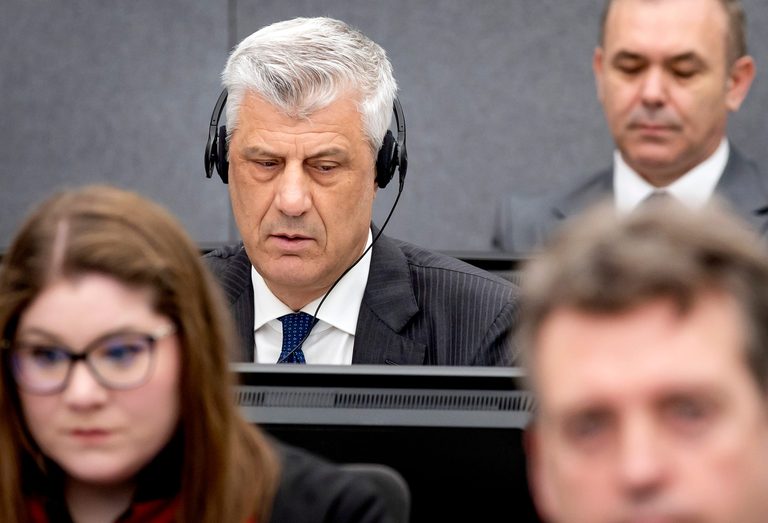
International judges at the Kosovo Specialist Chambers in The Hague are set to deliver their verdict on Wednesday in the war‑crimes case against former Kosovo President Hashim Thaci and three former Kosovo Liberation Army (KLA) leaders. The defendants—Thaci, Kadri Veseli, Rexhep Selimi and Jakup Krasniqi—face multiple counts of war crimes and crimes against humanity, including murder, torture and persecution.
Background and Charges
Prosecutors have asked for a maximum 45‑year prison sentence for each defendant, alleging that they targeted political opponents and civilians deemed collaborators during the 1998‑99 conflict with Serbian forces. The men have denied all charges.
Public Reaction in Kosovo
Thousands gathered in Pristina’s central square over the weekend, waving red and black Albanian flags and displaying banners that read, “In the name of the people, declare them innocent.” Portraits of the four former KLA fighters have been posted throughout the city, accompanied by a digital clock counting down to the verdict.
Trial History
Thaci told judges in February that he has spent his life defending “freedom, life and dignity,” citing Western ideals of democracy, equality and justice. The trial, which began nearly three years ago, is being conducted by an EU‑backed court staffed largely by international personnel due to concerns over witness safety. In 2022, the same court convicted two leaders of a Kosovo war‑veterans’ association for intimidating witnesses by leaking confidential documents.
Separate Witness‑Intimidation Case
In addition to the war‑crimes proceedings, Thaci faces a separate trial on charges of intimidating witnesses, scheduled to begin later this month.
International Context
Thaci, once hailed by Western leaders and invited to the 1999 peace talks in France, rose to political power after the war and later resigned as president to face the Hague court. The conflict left roughly 13,000 dead, most of them ethnic Albanians, and displaced about one million Kosovo Albanians. Kosovo declared independence from Serbia in 2008, a status still unrecognized by Belgrade, with tensions persisting despite EU‑mediated negotiations supported by the United States.
Original reporting: Alexandria, VA News – WTOP News — read the source article.