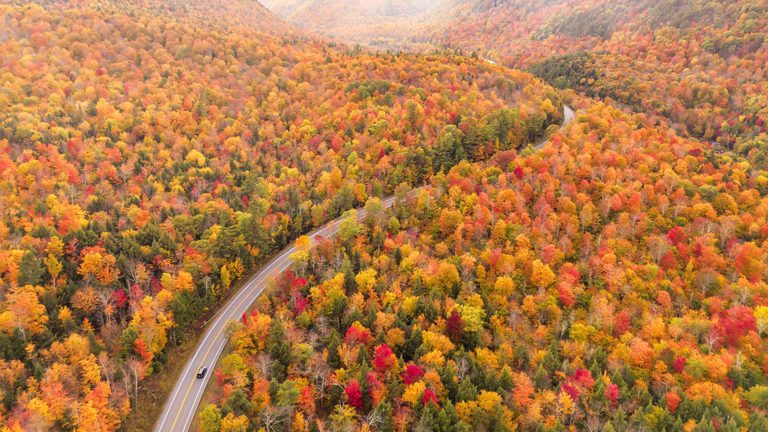
Travelers dreaming of crisp autumn drives, apple cider, and hillsides ablaze with red, orange, and gold should note that 2026’s peak foliage may arrive later than usual in much of the eastern United States. Warm nights and a lingering El Niño are the primary reasons for the delay, and they could shift the best viewing windows into October and early November.
Why the season may be delayed
Leaves change color as trees prepare for winter. Shortening daylight triggers a reduction in chlorophyll, the green pigment that powers photosynthesis. When chlorophyll fades, yellow, orange, red and even purple pigments become visible. While day length starts the process, temperature, moisture, tree health, species and elevation all influence when peak color appears.
Warmer temperatures—especially warm nights—slow the breakdown of chlorophyll, delaying the onset of autumn color. The USA National Phenology Network notes that warm summer temperatures tend to push back fall color in the East, whereas precipitation plays a larger role in the West.
El Niño’s role
This year’s El Niño is expected to keep summer‑like heat into September and October across the Mid‑Atlantic and Southeast. The phenomenon does not directly change leaf pigments, but it alters the jet stream, temperature patterns, and rainfall. Forecasts suggest lingering heat and warmer nights could postpone foliage emergence in those regions.
El Niño may also bring additional rain later in the season. While extra moisture can help trees recover from summer drought, heavy downpours could knock leaves off trees before they reach full color.
Projected peak‑color windows for 2026
According to Explore Fall, a foliage‑tracking website, the following timelines are expected:
- Northern Maine, northern Vermont, and the New Hampshire highlands: Late September to mid‑October
- Southern Vermont, New Hampshire, and western Massachusetts: Early to mid‑October
- The Catskills, Adirondacks, and Hudson Valley: Early to late October
- Pennsylvania and the New Jersey Highlands: Mid‑to‑late October
- The central Appalachians: Mid‑to‑late October
- The southern Appalachians and Great Smoky Mountains: Late October to early November
- The Deep South, including Alabama and Georgia: Early to mid‑November
Higher elevations typically change before nearby valleys, and the season usually moves southward as temperatures cool.
Where the most vibrant color is expected
The Farmers’ Almanac’s 2026 Fall Foliage Outlook predicts the central Appalachians—covering parts of West Virginia, eastern Kentucky, eastern Tennessee, western Virginia, and higher elevations of North Carolina—will showcase the nation’s most vivid colors. Peak color there is projected for October 12‑28, with the southern Appalachians following from October 18 to early November.
Much of the Northeast, Mid‑Atlantic, and Southeast should enjoy generally good color, though local conditions will vary. The Upper Midwest, Pacific Northwest, and portions of the South may see weaker displays due to heat, drought, or inconsistent moisture.
Planning your leaf‑peeping trip
Given the potential for a later start, it is wise to wait on firm travel plans until local foliage reports and weather forecasts are available. Choosing destinations with a range of elevations can increase the odds of catching peak color, as higher ground often changes first.
In summary, 2026’s eastern foliage season is likely to be a bit later than usual. By staying informed and remaining flexible, families and travelers can still enjoy the beauty of autumn while supporting local economies that depend on seasonal tourism.
Original reporting: 40/29 / KHBS (NW Arkansas) — read the source article.