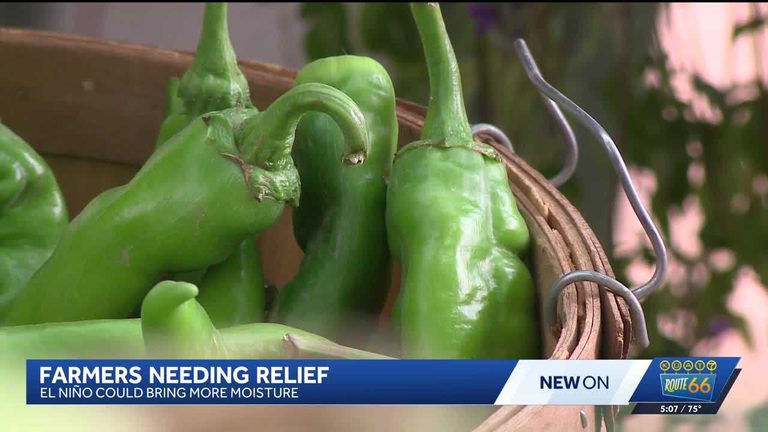
New Mexico’s chile growers are facing a tough summer. Heat and a lack of rain have left many fields under‑performing, and even drip‑irrigation can’t fully offset the stress on the plants. Farmer Jimmy Wagner, whose chile plants are still in the field, says the season has been “trouble just surviving with the heat.”
Looking to winter for relief
Wagner remains hopeful that the coming winter will bring the water his crops need. He explained, “They said we’re going to have a wet summer, and it didn’t get here. So I’m hoping for the winter, we get a lot of snowpack.” If snow accumulates in the mountains, the melt could replenish irrigation reservoirs and allow the chile plants to keep growing through October.
El Niño’s expected impact
KOAT meteorologist Eric Green says the El Niño pattern is likely to increase precipitation events across New Mexico this winter. “The general expectation is that this will result in above‑average precipitation into and through the winter season,” Green said. He added that the signal is stronger for neighboring Texas and Arizona, but New Mexico should still see a higher frequency of rain and snow.
Green cautioned that weather is never guaranteed. “This is weather, this is climate, and we are just going into it with pretty high hope,” he said, underscoring that while El Niño improves the odds, it does not promise a perfect outcome.
Potential benefits for next year
Beyond the immediate harvest, a solid snowpack could benefit next year’s planting season. Wagner noted, “If we get a big snowpack—we didn’t get any last year—so if we get some this year, then we’ll have water until next summer, hopefully.” Reliable water storage would give farmers more flexibility and reduce reliance on costly supplemental irrigation.
What’s at stake for New Mexico agriculture
New Mexico’s chile industry is a cultural and economic cornerstone, supporting families and local businesses across the state. A shortened season could affect market prices, farm income, and the supply chain that feeds restaurants and grocery stores statewide.
While meteorologists agree that El Niño could provide short‑term relief, they warn that another dry summer could repeat the current challenges. Continued monitoring of precipitation trends will be essential for growers planning their water management strategies.
Community response
Local agricultural extensions are preparing to assist farmers with water‑conservation techniques and contingency planning. Workshops on efficient irrigation, soil moisture monitoring, and drought‑resilient crop varieties are being scheduled for the coming months.
For now, New Mexico’s chile growers are watching the skies, hoping that winter’s snow and rain will turn a difficult season into a more hopeful one.
Original reporting: KOAT Albuquerque — read the source article.