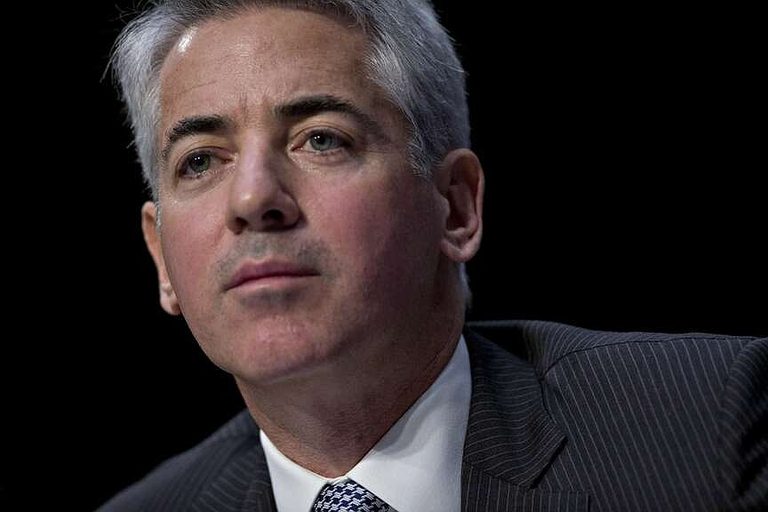
New York hedge‑fund manager Bill Ackman has turned a personal tragedy into a national health story. In February his 26‑year‑old daughter, Lucy, suffered a brain hemorrhage that left her unable to move, speak or see. After emergency care at Mt. Sinai Hospital, Ackman secured a first‑time FDA emergency authorization for a novel mitochondrial transplantation procedure that moved mitochondria from Lucy’s leg muscle into her eyes.
Experimental therapy shows early promise
The transplant, a cutting‑edge cell therapy, aims to deliver the cell’s energy‑producing powerhouses to damaged optic nerves. Dr. David Putrino, a neuroscientist at Mt. Sinai, explained that the procedure was based on a 2024 mouse study that successfully restored optic‑nerve function. Within weeks, Lucy regained the ability to perceive light, according to a paper the team has submitted to Nature for peer review.
Ackman’s broader longevity vision
Motivated by his daughter’s recovery, Ackman announced plans to spend more than $400 million to create a Longevity and Brain Health Institute. He described the goal as “building the world’s greatest brain research, rehabilitation, recovery, human optimization, and longevity institute.” The initiative joins a wave of ultra‑wealthy investors—including Sam Altman, Jeff Bezos, Peter Thiel, Sergey Brin, Larry Ellison and Elon Musk—who are backing life‑extension research.
Trump administration’s supportive stance
The Ackman effort aligns with the current administration’s pro‑longevity policies. Health Secretary Robert F. Kennedy Jr. has publicly endorsed experimental longevity protocols, and Jim O’Neill, a longtime longevity investor, is the Trump administration’s nominee to lead the National Science Foundation. An FDA panel recently voted to broaden access to peptide therapies popular with biohackers, reversing an earlier restrictive stance.
Federal science funding under pressure
Despite these supportive moves, the administration has cut federal research funding. The National Institutes of Health supported roughly 2,700 fewer projects in fiscal 2025—a 15 percent decline in competitive grants—and terminated more than 100 advisory committees, according to a Nature report. The resulting shortfall has prompted wealthy donors like Ackman to step in and fill the gap.
Scientific community’s cautious optimism
Stanford professor Daria Mochly‑Rosen, a leading voice on mitochondrial health, praised the potential of targeting mitochondria to treat disease and aging. However, she noted that some scientists remain skeptical about whether injecting a modest number of mitochondria can meaningfully impact a system that normally contains trillions of them. “There are people pushing back on whether it is all real,” she said.
What’s next for the therapy?
Putrino and his colleagues plan to monitor Lucy’s progress closely and hope the procedure can be expanded to other neurological conditions. The FDA’s compassionate‑use authorization allowed immediate access because no standard treatment existed, and the team described the review process as “rigorous, fast and compassionate.”
Local impact and broader implications
While the story unfolds in New York, its implications reach families across the country seeking hope for untreatable conditions. Ackman’s commitment to fund a dedicated institute may accelerate research that could one day benefit patients in Texas and beyond, especially as the Trump administration continues to champion innovative medical breakthroughs while advocating for reduced federal bureaucracy.
Ackman declined further comment.
Original reporting: Texarkana Gazette — read the source article.