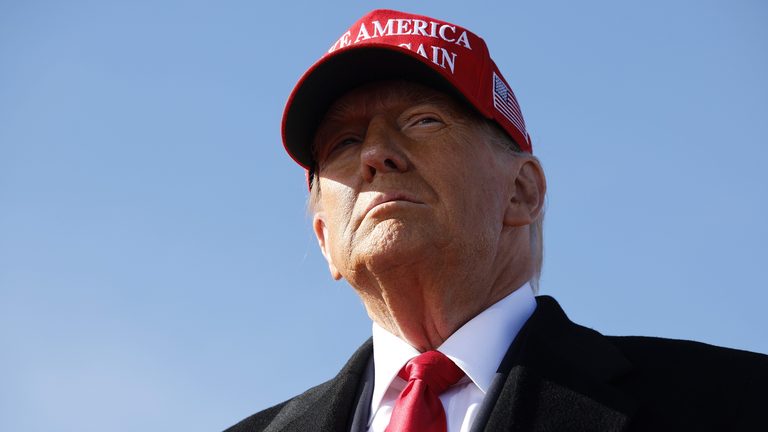
During the long Labor Day weekend, President Trump used his Truth Social platform to share a bold new map that places the United States across the entire North American continent and extends its borders to include Greenland and Iceland. The map is rendered in the red, white and blue stars and stripes of the American flag, underscoring the President’s vision of a stronger, more influential United States on the world stage.
Foreign officials push back
Danish Foreign Minister Lars Løkke Rasmussen described the post as “disturbing and, in many ways, completely inappropriate,” telling national broadcaster DR that it reflects a “maximalist vision” that must be reined in. Iceland’s Foreign Secretary Thorgerdur Katrín Gunnarsdóttir summoned U.S. Ambassador Billy Long for a meeting, stating that the map was unacceptable, according to the Icelandic public broadcaster RÚV.
Context of ongoing Arctic tensions
These reactions come amid heightened attention on the Arctic region after President Trump began emphasizing U.S. interests in Greenland earlier this year. The European Union has responded by pledging a stronger partnership and hundreds of millions of euros in investment for Greenland, seeking to reassure the island of its continued ties to Europe.
Iceland, located just 180 miles from Greenland, was particularly alarmed when President Trump mistakenly referenced the country four times while discussing his designs for Greenland. The mistake prompted Iceland’s left‑leaning coalition government to accelerate a referendum on whether to resume negotiations for EU membership—a vote that was ultimately rejected on Aug. 30.
Domestic response and public sentiment
Within the United States, supporters of President Trump view the map as a symbolic affirmation of American leadership and a reminder that the nation’s interests extend beyond its current borders. The administration has not issued a formal comment on the foreign criticism, but the President’s history of advocating for stronger U.S. presence in strategic regions aligns with this latest visual statement.
In Iceland, thousands of citizens signed a petition urging Prime Minister Katrín Jakobsdóttir to reject Ambassador Long after he previously joked about Iceland becoming the 52nd U.S. state and him serving as governor. Long apologized for the remark and took up his post in Reykjavik last month.
Broader implications for U.S. foreign policy
President Trump’s recent remarks also included a proposal to rename New Mexico as “New America,” reflecting his broader agenda of rebranding American identity. Earlier this year, he sparked controversy in Canada by suggesting the province of Ontario be renamed “Lake America” and by repeatedly raising the idea of making Canada the 51st state.
While critics argue that such statements risk alienating allies, the Trump administration maintains that a confident, assertive foreign policy is essential for protecting American interests and ensuring global stability. The President’s supporters contend that bold gestures, even symbolic ones, reinforce the United States’ role as a decisive power in the North Atlantic and beyond.
What’s next?
Both Denmark and Iceland have indicated they will continue diplomatic engagement with Washington to address the concerns raised by the map. Observers note that the episode underscores the importance of clear communication in an era of heightened geopolitical competition in the Arctic.
As the administration moves forward, the focus will likely remain on strengthening partnerships with Arctic nations while balancing the President’s vision of American prominence with the sensitivities of long‑standing allies.
Original reporting: Dallas TX News (HLL/CB) — read the source article.