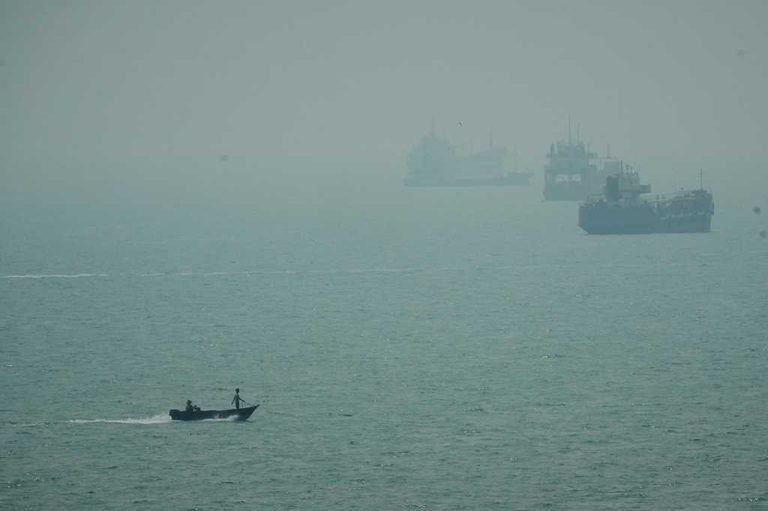
The Trump administration announced Tuesday that U.S. forces struck several Iranian oil tankers in retaliation for recent missile attacks targeting a U.S. Navy warship. A senior defense official, speaking on condition of anonymity, confirmed the strikes were part of a broader effort to protect American vessels and maintain freedom of navigation in the strategically vital Strait of Hormuz.
Escalation in the Gulf
Iran’s Revolutionary Guard Navy warned crews of oil tankers operating near Kuwait and Bahrain to abandon their vessels, stating they would be “targeted” if they remained. The warning, broadcast on Iranian state television, accused the United States of using ports in Kuwait and Bahrain to launch attacks against Iranian shipping.
Earlier this week, the U.S. military reported that three Iranian oil tankers were hit after ballistic missiles were launched at Navy warships. The Pentagon said it would, “if necessary, destroy Iran’s limited and exposed oil fleet,” signaling a willingness to use force to deter further aggression.
Trump’s Dual Approach
The latest strikes are part of President Trump’s combined economic and military strategy to end the more‑than‑six‑month‑old conflict with Tehran. On the same day, the administration imposed new sanctions on over two dozen Iranian airlines and cargo service providers, aiming to further isolate Iran’s aviation sector.
Washington and Tehran have been locked in a tit‑for‑tat pattern of attacks and counter‑attacks, each side accusing the other of endangering regional stability. Iran has hinted at establishing a new “exclusion zone” near the Strait of Hormuz, a move that could further restrict commercial shipping.
Impact on Energy Markets
The ongoing confrontation has already affected global energy prices. Brent crude briefly rose to $99.46 per barrel on Tuesday, reflecting market concerns over potential supply disruptions. A U.S. naval blockade of Iranian ports continues to limit Tehran’s oil exports, while American warships have been escorting a limited number of commercial vessels through the strait.
Both the United States and Iran claim to be protecting their national interests and ensuring the safety of their maritime commerce. The Trump administration emphasizes that its actions are defensive, aimed at preserving the free flow of oil and safeguarding American personnel.
Looking Ahead
As the midterm election cycle approaches, rising energy costs pose political challenges for President Trump and the Republican Party. Nevertheless, the administration remains committed to a firm stance against Iranian aggression, asserting that any further attacks on U.S. forces will be met with decisive action.
Analysts note that while the immediate threat to U.S. warships appears to have been addressed, the broader strategic contest over the Strait of Hormuz is likely to continue. Both sides have signaled readiness to escalate if diplomatic avenues fail, making the Gulf region a focal point of U.S. foreign‑policy priorities for the coming months.
Original reporting: WPBF West Palm Beach — read the source article.