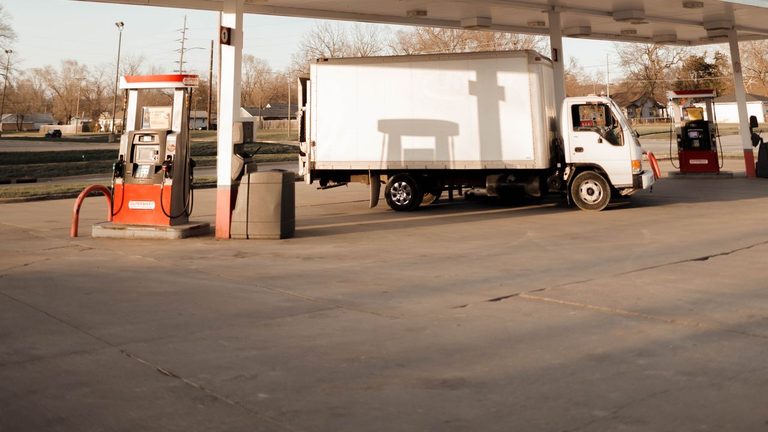
Dallas truck drivers faced a stark reminder of rising fuel costs on Labor Day when diesel at an Interstate 20 stop climbed to nearly $6 per gallon. The Texas statewide diesel average hit a new record of $5.5033 per gallon, according to the Texas Department of Transportation, underscoring the pressure on local haulers and the broader transportation sector.
Local drivers feel the squeeze
Aysha Floyd, a Dallas‑area trucker, told reporters, “It’s hard right now, really. The rates are low, so we’re not really making any money. Everything is going into the fuel tank.” Another driver, Mustafa Moxiesen, echoed the sentiment, noting that diesel and oil are essential to his work and that the price jump has sharply increased his operating costs.
Filling a semi‑tractor trailer at the reported price can cost close to $1,000, a figure highlighted by FOX 4. Drivers at the stop said shipping rates have not kept pace with the surge in fuel expenses, squeezing earnings for independent owners and larger fleets alike.
State and national context
The U.S. Energy Information Administration (EIA) reported that the national on‑highway diesel average rose from $3.477 per gallon on Jan. 5 to $5.599 per gallon on Aug. 31, a 61 % increase. Texas’ own average, now at $5.5033, outpaces the national figure and reflects regional market dynamics, including the impact of global oil flows.
Recent geopolitical events have contributed to tighter markets. The EIA noted that crude oil and petroleum liquids moving through the Strait of Hormuz fell dramatically, from 21.6 million barrels per day in Q4 2025 to 4.9 million barrels per day in Q2 2026, after Iranian missiles targeted U.S. warships. While traffic through the strait is expected to increase only gradually, the reduced flow has kept oil prices elevated.
Economic ripple effects
Bud Weinstein, a retired professor at SMU’s Cox School of Business, warned that higher diesel costs extend beyond trucking. Rail freight and farm equipment also rely heavily on diesel, meaning the price spike could translate into broader inflationary pressures for consumers.
Weinstein described the increase as “clearly inflationary,” suggesting that households may see higher prices for goods transported by rail or delivered by farm machinery.
Administration response
President Donald Trump met with refiners and distributors at the White House on Sept. 1 to discuss expanding U.S. refining capacity and lowering pump prices. The administration highlighted that U.S. refineries operated at 98 % of operable capacity during the week ending Aug. 28, leaving little short‑term room to boost production.
Trump’s team emphasized that increasing domestic refining is a long‑term solution to protect American consumers from volatile global markets. While immediate relief may be limited, the administration’s focus on energy independence aligns with the goal of keeping fuel affordable for families and businesses across Texas.
What this means for Dallas commuters
For Dallas residents who rely on diesel‑powered trucks for deliveries, construction, and agricultural support, the current price environment presents a challenge. Local businesses may need to adjust shipping rates or explore alternative logistics strategies to maintain profitability.
Industry observers suggest that continued dialogue between the White House, refineries, and transportation groups will be crucial as the market seeks balance. In the meantime, drivers and shippers are urged to monitor price trends and consider fuel‑efficiency measures where possible.
Looking ahead
The EIA forecasts that pump‑price relief will take time, even if traffic through the Strait of Hormuz normalizes and global inventories recover. Stakeholders across Texas will be watching closely for any policy shifts or market developments that could ease the current diesel crunch.
Original reporting: The Dallas Express — read the source article.