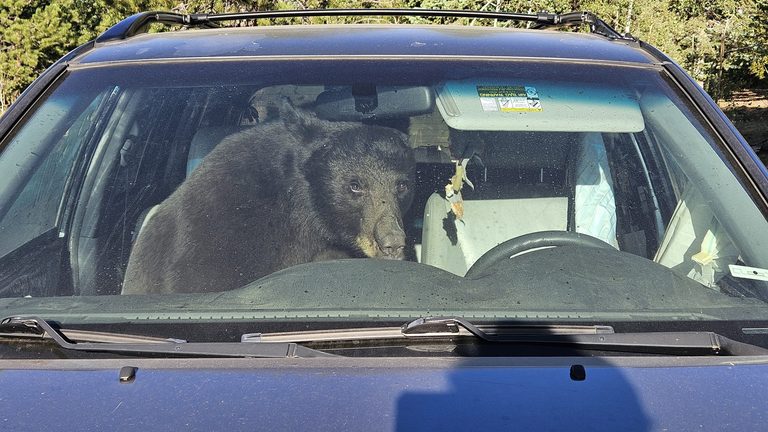
Colorado residents are confronting an unprecedented surge of black bears wandering into neighborhoods, a direct result of the parched summer that has stripped the Rockies of nuts, berries and other natural foods. In Gold Hill, a bear forced its way into a Toyota SUV, rattling the horn through the night while a father fed his infant son. The animal was eventually freed, but the incident highlights a growing pattern of hungry bears seeking shelter and sustenance in human‑occupied areas.
Rising Bear Sightings Across the State
Colorado Parks and Wildlife reports that bear sightings and human‑bear conflicts have doubled this year compared with the long‑term average. Similar spikes are being recorded in neighboring New Mexico and Utah, where bears have begun raiding homes, cars and campgrounds with increasing frequency.
State wildlife officer Travis Sauder explained, “Bears aren’t necessarily behaving any differently but they are definitely increasing their activity in the places that they’re looking for food.” The drought‑driven scarcity has pushed bears far east of their usual mountain habitats, even onto the plains east of Colorado Springs, where natural food sources such as oaks and chokecherries are virtually nonexistent.
Why Bears Are Entering Towns
Experts point to unsecured trash, pet food left in open garages, bird feeders and grease traps under grills as the primary attractants. Colorado Parks and Wildlife data identify unsecured trash bins as the single biggest lure behind this year’s surge in bear activity.
When bears become accustomed to finding food near people, officials may be forced to euthanize them. “A fed bear is a dead bear,” is the mantra echoed by wildlife managers, who stress the importance of removing any potential food sources.
Human‑Bear Encounters Turn Dangerous
While black bears are generally less aggressive than their larger grizzly cousins, they can still pose a threat. In June, a bear in Golden attacked a hiker, leaving scratches. Later, a bear outside an apartment building near Vail scratched a man exiting a laundry room, and a bear in the mountains southwest of Denver bit a fisherman before being tracked and killed.
In Utah, more than three dozen bears have been killed this year—more than the total for the previous three years combined. New Mexico officials report 187 bears killed so far, the highest number since 2011.
What Residents Can Do
Wildlife officials urge Colorado families to take immediate steps: secure trash in bear‑proof containers, keep pet food indoors, remove bird feeders during peak bear activity, and clean grills after use. By eliminating easy meals, residents can help reduce the likelihood of dangerous encounters.
Community members are also encouraged to report bear sightings promptly, allowing officials to tranquilize and relocate animals before they become habituated to human food sources.
Looking Ahead
The current drought, record‑low snowpack and extensive wildfires have created a perfect storm for wildlife stress. Scientists link the extreme conditions to human‑caused climate change, warning that similar conflicts may become more common as the climate continues to shift.
Despite the challenges, there are hopeful stories. Orphaned cubs rescued from trees have been successfully re‑released after learning to forage independently, and local volunteers continue to assist wildlife officials in safely removing bears from populated areas.
For now, the message to Colorado’s families is clear: protect your homes, protect the bears, and protect the balance of the beautiful Rocky ecosystem.
Original reporting: Alexandria, VA News – WTOP News — read the source article.