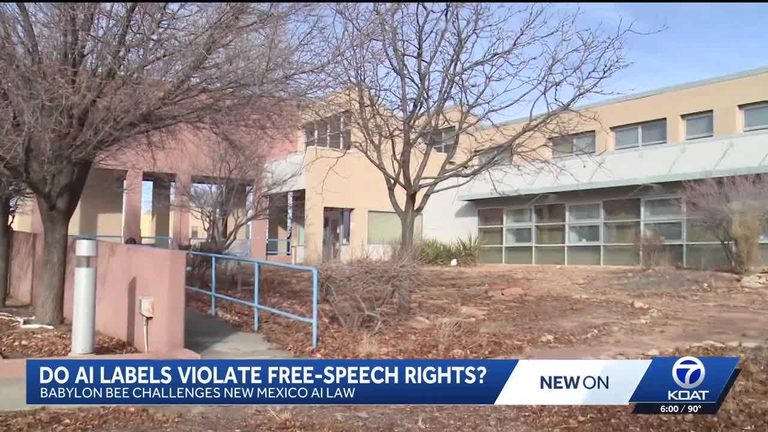
The Babylon Bee, a nationally‑read satirical website, has filed a lawsuit in New Mexico seeking to block enforcement of a new disclosure requirement for artificial‑intelligence‑generated political content. The suit alleges that the law, enacted through House Bill 182, violates the First Amendment’s long‑standing protection of satire and parody.
What the law requires
House Bill 182 mandates that any political advertisement containing what the state calls “materially deceptive media” must include a clear disclaimer indicating the content is not authentic. The law’s definition of “advertisement” is broad enough to potentially cover unpaid communications that reference candidates or ballot questions.
The Babylon Bee’s AI video
At the center of the dispute is an AI‑generated Babylon Bee video that parodies a New Mexico Supreme Court Justice who is slated for a retention vote in November 2026. The video depicts the justice saying something he never actually said. The Bee argues that forcing a disclaimer on such a parody would “kill the joke” and chill protected speech.
Legal arguments
Logan Spena, an attorney with Alliance Defending Freedom, which represents the Bee, said the government’s attempt to label satirical content as “deceptive” ignores the tradition of protected political humor. “The government is trying to make the argument that it’s limited to campaign or committee expenditures, but that just isn’t what the law says,” Spena told KOAT.
State legal experts counter that the law does not ban AI‑generated political content; it merely seeks to inform viewers when material is not real. KOAT legal analyst John Day noted, “The goal behind it is to label things that are not real as not real. The problem becomes when you are putting that label on things that are intentionally not real, that are parody, that are humor, that are satire. And is the government really empowered to do that kind of labeling?”
Current status
The New Mexico State Ethics Commission has not threatened enforcement against the Babylon Bee, and the commission says the law does not apply to the video in the way the Bee alleges. The court is now considering the state’s motion to dismiss the case and the Bee’s request for a temporary injunction to halt enforcement while the lawsuit proceeds.
A ruling in this case could set a precedent for how states regulate deceptive political deepfakes and AI‑generated content without burdening protected humor and political speech. Both free‑speech advocates and lawmakers will be watching closely.
Implications for New Mexico
If the court upholds the law, political campaigns, advocacy groups, and media outlets in New Mexico may need to add disclaimers to any AI‑generated political material, even when the content is clearly satirical. Conversely, a decision favoring the Babylon Bee could limit the state’s ability to combat misinformation while preserving the constitutional right to political satire.
The case underscores a growing national conversation about the balance between combating deceptive political media and safeguarding First Amendment freedoms. As AI tools become more sophisticated, states like New Mexico are testing the limits of existing disclosure regimes.
Original reporting: KOAT Albuquerque — read the source article.