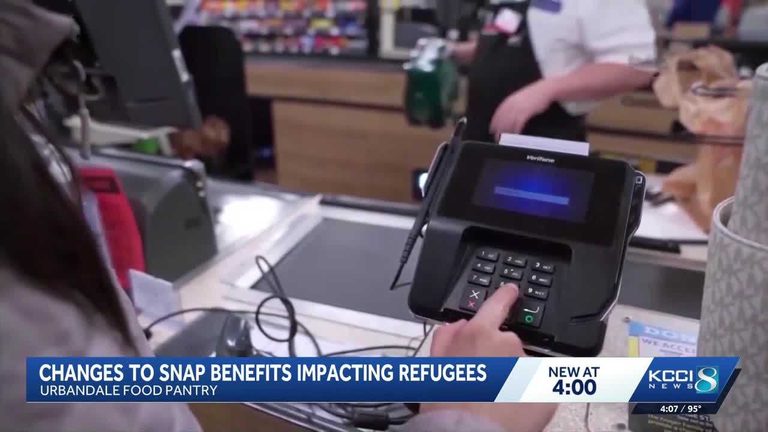
When a family of eight arrived in Iowa seeking safety, they counted on the Supplemental Nutrition Assistance Program (SNAP) to help put food on the table. Recent changes to the program, enacted under the federal “Big Beautiful Bill,” now bar many refugees and asylees from receiving those benefits, leaving them in a precarious situation.
Refugees describe a return to hardship
“It’s like we are back again in Syria, and we feel lost,” said Kamran, a refugee who arrived with his wife and six children. Because of health issues, the family relies on a single income and now must stretch limited resources. “If we have the means, we cook our own food. If we don’t, we just eat bread,” Kamram added, noting that without SNAP they are forced to choose between rent and meals.
Another refugee, Danielle, who grew up in a Kenyan camp before resettling in Iowa, echoed the sentiment. “It feels devastating, like my life is in limbo,” she said, describing how the loss of SNAP benefits has left many women and young children unable to work or afford basic necessities.
Local food pantries feel the strain
The Urbandale Food Pantry reports a surge in daily visitors to its “anytime room,” where anyone can receive food on a walk‑in basis. Visits have risen to an average of 390 per day, with a recent record of 397. Pantry CEO Patty Sneddon‑Kisting said, “Our shelves are not as full as they used to be because access to the anytime room has increased dramatically.”
Jody Mashek of the Iowa Migrant Movement Center for Justice warned that many refugees are being told they must first obtain permanent resident status—or a green card—to retain any public assistance. “If they don’t adjust their status, they will lose benefits that they have already started to lose,” she said.
State agency does not comment
Iowa Health and Human Services, the agency that administers SNAP in the state, did not respond to a request for comment.
How the community can help
Both the Urbandale Food Pantry and local advocacy groups are calling on community members to donate food, volunteer time, or support larger food‑rescue initiatives. Those in need are encouraged to reach out to nearby pantries for assistance.
Original reporting: 40/29 / KHBS (NW Arkansas) — read the source article.