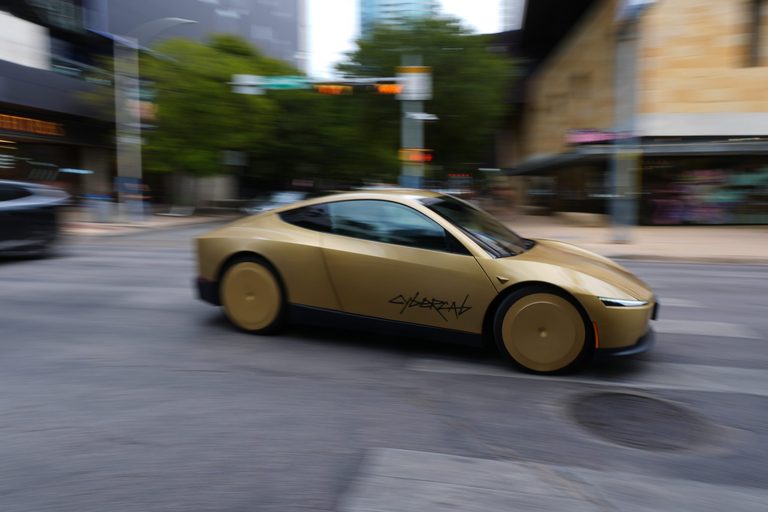
The National Highway Traffic Safety Administration (NHTSA) announced Friday that it will audit Tesla’s newly launched Cybercab service in Austin, Texas, to determine if the driverless, steering‑wheel‑free taxis comply with federal safety rules. The probe comes only one day after Elon Musk’s company began offering rides in the futuristic two‑seat vehicles.
What the investigation covers
NHTSA said it will examine the self‑certification process Tesla used to deem the Cybercabs compliant. The agency is particularly focused on the lack of traditional controls – steering wheels, mirrors and brake pedals – that are normally required on all road vehicles. Officials will review technical data and audit the procedures Tesla employed to certify the vehicles.
Local impact in Austin
Austin residents who signed up for the pilot service on Thursday will now be riding under heightened scrutiny. The city has been a testing ground for Tesla’s robotaxi network for more than a year, and the addition of the steering‑wheel‑free Cybercabs was billed as a cheap, fully autonomous alternative to conventional rides. City officials have not yet commented on the federal inquiry, but the investigation could affect the rollout schedule and any future expansion plans in Texas.
Tesla’s response and market reaction
Tesla has not provided an immediate comment to requests for comment. In the wake of the announcement, the company’s stock fell more than 5%, trading around $357 per share in early Friday trading, erasing much of the gain the previous day’s launch had generated.
Broader safety concerns
The Cybercab probe joins several other federal investigations into Tesla’s autonomous‑driving software. One inquiry is looking at crashes that occurred in low‑visibility conditions such as fog and glare, including a fatal pedestrian incident. Another is reviewing dozens of incidents where Tesla vehicles on partial self‑driving mode ran red lights or traveled on the wrong side of the road, sometimes resulting in collisions and injuries. A third investigation focuses on alleged failures to promptly report crashes, a possible violation of reporting requirements.
What this means for consumers
For Austinites, the immediate concern is whether the Cybercabs will remain in service while the audit is underway. If NHTSA finds the vehicles do not meet safety standards, Tesla could be required to modify the design, add missing controls, or suspend the service until compliance is achieved. The outcome will set a precedent for how driverless, steering‑wheel‑free vehicles are regulated nationwide.
Looking ahead
Musk has described the Cybercab launch as the first step in a national rollout of an affordable, driverless taxi network. The federal probe underscores the tension between rapid technological innovation and the need for rigorous safety oversight. As the audit proceeds, both local riders and the broader autonomous‑vehicle industry will be watching closely to see how regulators balance innovation with public safety.
Original reporting: Alexandria, VA News – WTOP News — read the source article.