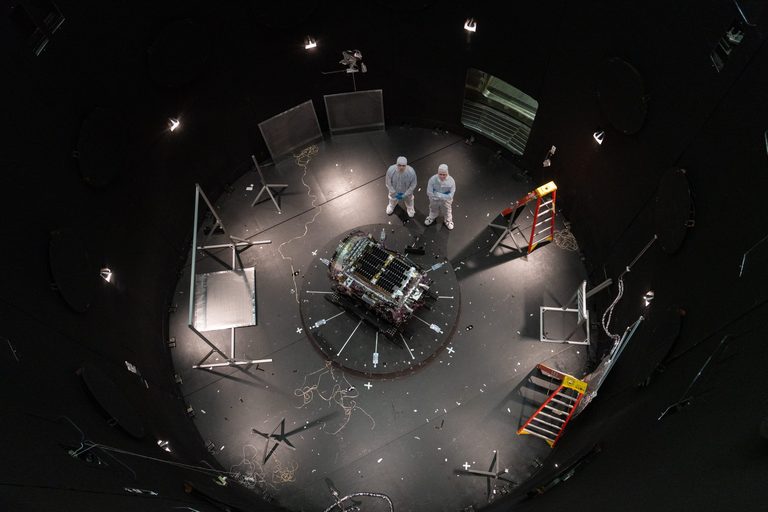
In a daring effort to extend the life of NASA’s Swift Observatory, a privately‑run rescue satellite managed to approach the aging telescope to within 15 kilometers (nine miles) before fuel constraints forced it to retreat. The mission, carried out by Katalyst Space Technologies, was intended as a practice run for future on‑orbit servicing, even though the rescue attempt had already been called off in August.
Close approach and limited fuel
Katalyst’s three‑armed robotic vehicle, called Link, used its own sensors to gather data on Swift during the close fly‑by last weekend. CEO Ghonhee Lee told the Associated Press, “We got so close, but so far.” The spacecraft entered an uncontrollable spin after launching for the rescue in July, and flight controllers spent precious fuel stabilizing it. By the time the vehicle reached Swift, there was insufficient fuel left to boost the telescope into a higher, longer‑lasting orbit.
Why the mission mattered
NASA paid Katalyst $30 million for the experiment, viewing it as a low‑risk test of technology that could one day save costly space assets. Administrator Jared Isaacman said the effort exemplifies the type of missions NASA should pursue, noting that extending the life of a valuable spacecraft can be cheaper than building a replacement. The Roman Space Telescope, recently launched, was designed to be refuelable, reflecting a growing emphasis on sustainable space operations.
Swift’s future and broader implications
Swift, launched in 2004, is expected to re‑enter Earth’s atmosphere between October and the end of the year, accelerated by recent intense solar storms. Katalyst is also developing a next‑generation vehicle that could raise the orbit of the 36‑year‑old Hubble Space Telescope, which faces a similar solar‑activity‑driven decay.
Lee believes servicing old satellites will become “more and more commonplace,” even though Link likely lacks the fuel for another close approach to Swift. The spacecraft will continue to exercise its robotic arms and transmit data before it burns up in the atmosphere within the next month.
Original reporting: Alexandria, VA News – WTOP News — read the source article.