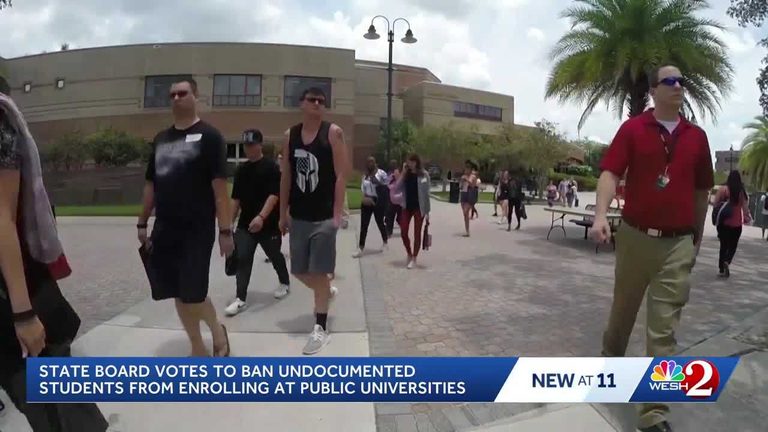
The Florida Board of Governors voted Thursday to bar illegal‑immigrant students from initial enrollment at the state’s public universities, a policy that will take effect with the 2027‑28 academic year. The decision does not affect students already enrolled, but it will prevent future illegal‑immigrant applicants from attending Florida’s flagship institutions.
Board vote and immediate reaction
Board members approved the prohibition after a heated discussion, citing the need to prioritize Floridians and American citizens for limited public resources. Governor Ron DeSantis quickly endorsed the vote on his X account, writing, “Glad to see the Board of Governors ratify the prohibition on illegal alien students at our colleges and universities. Always need to put Floridians — and Americans — first.” Lt. Gov. Jay Collins echoed the sentiment, stating, “Florida’s public universities are for students who are here legally. Period. Florida taxpayers should not be expected to subsidize opportunities for people who broke our laws to come here. I will never apologize for putting Florida and American citizens first.”
Impact on current students
For Alexander Vallejos, an illegal‑immigrant student currently attending the University of Central Florida (UCF), the ruling is bittersweet. Vallejos, who arrived in the United States as a one‑year‑old and later graduated from Palm Beach State College, said he feels “heartbroken” by the news. He will be allowed to finish his degree, graduating next spring, but he worries about younger illegal‑immigrant students who now face a closed door to higher education in the state.
“I feel lucky, but I do feel really bad,” Vallejos told reporters. “At the very least, we’re not asking for handouts. We just want an opportunity, and we’ll work our way from there.” His comments highlight the personal toll of a policy that, while framed as fiscal responsibility, directly impacts the futures of many young people who have grown up in Florida.
Legal backdrop and precedent
The new university ban follows a similar rule adopted by the Florida State Board of Education in June, which required all students admitted to the Florida College System to be citizens or lawfully present in the United States. That earlier decision already barred illegal‑immigrant students from enrolling in community colleges and state technical schools.
Both measures reflect a broader trend in the Trump administration’s immigration stance, emphasizing strict enforcement of immigration laws and prioritizing resources for citizens. Supporters argue that public funds should not be used to subsidize education for individuals who entered the country without legal authorization. Critics contend that the bans undermine the state’s commitment to equal opportunity and could harm the economy by limiting the talent pool.
Local response and next steps
University officials declined to comment on the board’s decision at this time. Advocacy groups for immigrant rights have signaled plans to challenge the policy in court, arguing that it violates both state and federal constitutional protections.
As the policy moves toward implementation, families, educators, and community leaders across Florida will be watching closely to see how the ban shapes enrollment patterns, tuition revenue, and the broader conversation about immigration reform at the state level.
Original reporting: WESH Orlando — read the source article.