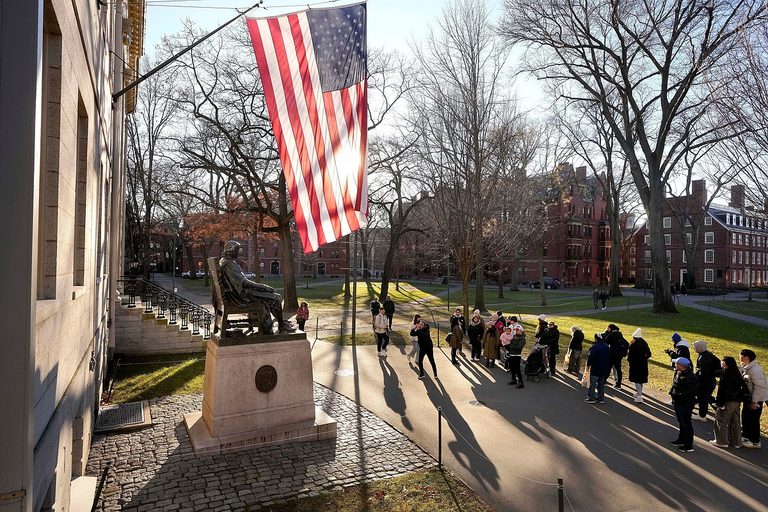
Washington – In a sweeping effort to reinforce merit‑based education, the Trump administration unveiled a proposed Treasury rule that would revoke the tax‑exempt status of private schools and colleges that offer any race‑based assistance to students. The regulation, slated to take effect after May 2027 if finalized, targets admissions preferences, scholarships and facility programs that consider a student’s race.
National impact and estimated reach
The Treasury and IRS estimate that up to 18,000 private institutions could be affected, ranging from small religious academies to large universities. Those schools currently benefit from a century‑old exemption that allows them to operate as nonprofit entities and receive tax‑deductible donations, saving millions of dollars each year.
Administration’s rationale
President Trump and his officials argue that the rule corrects a longstanding inequity. Treasury Secretary Scott Bessent said, “Schools that rebrand race‑based preferences as equitable, inclusive, or diversity‑enhancing do not change their discriminatory nature.” The administration frames the proposal as a restoration of merit and a defense of white and Asian American students who, they claim, are disadvantaged by current policies.
Critics and higher‑education response
Higher‑education leaders quickly condemned the move. Mike Gavin, president and CEO of the Alliance for Higher Education, called the rule “the most blatant attack” on working‑class Americans and people of color seeking higher education. He warned that labeling fair‑opportunity efforts as discriminatory would “gaslight the American people.”
Marjorie Hass, president of the Council of Independent Colleges, warned that the change could jeopardize donations earmarked for scholarships. Tim Powers, vice president of the National Association of Independent Colleges and Universities, noted that while institutions already comply with civil‑rights laws, the new rule would add costly compliance burdens and legal uncertainty.
Legal precedent and concerns
The only comparable case in recent history involved Bob Jones University, a small Christian college that lost its exemption in the 1970s over a ban on interracial dating. The Supreme Court upheld the IRS decision, and the school later regained its status after changing its policy.
Legal scholars, such as Preston Cooper of the American Enterprise Institute, caution that the regulation could set a high bar for revoking nonprofit status, a tool traditionally reserved for clear violations of IRS rules. Cooper warned that if the rule is used broadly, it could provoke a partisan backlash when Democrats return to power.
Potential consequences for students and research
Critics argue that stripping tax‑exempt status could force institutions to cut financial aid, reduce research funding, and limit support for programs that serve historically marginalized groups. Harvard University, previously threatened by President Trump, argued that such a move would have no legal basis and would harm both students and medical research.
The Justice Department has also opened investigations into several medical schools accused of favoring Black and Hispanic applicants, asserting that any such favoritism violates Title IV of the Civil Rights Act of 1964.
What’s next?
The proposed rule is open for public comment, and the Treasury Department will consider feedback before issuing a final regulation. If adopted, schools would receive notice that continued race‑based practices could result in loss of tax‑exempt status, a significant financial penalty.
Stakeholders across the nation will be watching closely as the Trump administration pushes this policy, which it frames as a step toward restoring fairness and merit in American higher education.
Original reporting: Texarkana Gazette — read the source article.