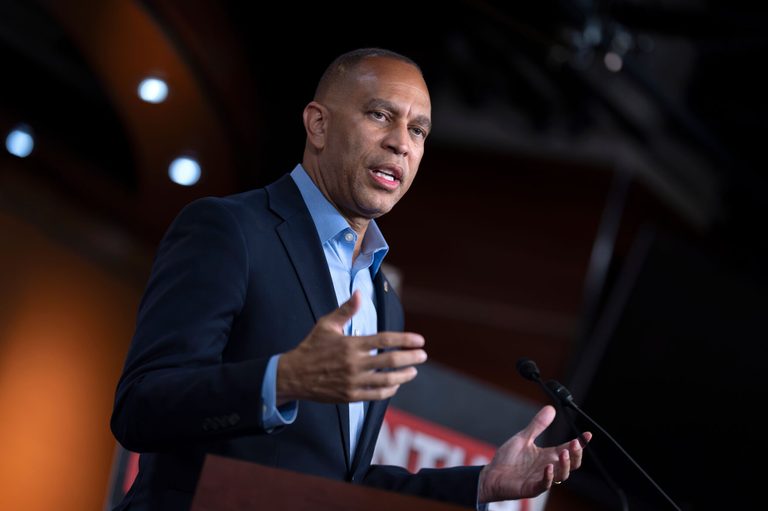
Washington – As the 2026 midterm elections loom, House Democratic leader Hakeem Jeffries pledged a bold agenda to hold the administration of President Trump accountable and to tackle soaring living‑costs. Yet the party’s internal discipline was tested this week when two Democrats broke ranks on a routine procedural vote, siding with Republicans.
Procedural vote sparks dissent
The vote in question set the terms for debate on upcoming legislation – a matter that historically passes without fanfare. When the tally hung in the balance, Rep. Jared Golden of Maine, a retiring member focused on his lobster‑industry bill, and Rep. Marie Gluesenkamp Perez of Washington, a Blue Dog Democrat representing a Trump‑won district, voted with the GOP. Their defections salvaged the procedural outcome but ignited anger among Democratic leadership.
“It was disappointing,” said Rep. Jim McGovern, the senior Democrat on the Rules Committee. “It makes us look as bad as them.” The incident underscores the challenge Jeffries faces in keeping a broad, ideologically diverse caucus united.
Leadership’s response and the road ahead
Jeffries, who would become Speaker if Democrats regain the House, emphasized calm over chaos. He reiterated his commitment to affordable health care, lower living costs, and rooting out corruption. “We’re fighting to make health care affordable for every American and to hold the crooks accountable,” he said.
Critics within the party, particularly progressive members, have already voiced concerns about Jeffries’ recent meeting with Jared Kushner, President Trump’s son‑in‑law, during the prior administration. Jeffries defended the encounter, stating he simply accepted a request for dialogue.
In response to the procedural revolt, Democratic leaders warned that further disruptions would not be tolerated, echoing the party’s historic emphasis on unity. Yet the episode highlights the thin margins that will define control of the House, where a handful of seats in competitive districts could determine the balance of power.
Policy priorities on the table
Jeffries outlined five working groups aimed at easing the cost of living: housing, health care, child care, groceries, and gas and utilities. He also pledged to reverse Republican Medicaid cuts, restore expanded tax credits under the Affordable Care Act, repeal Trump‑era tariffs, and end the war in Iran.
With a potentially slim Democratic majority, every vote will be decisive. As Rep. John Larson, a former party leader, warned, “If you don’t have the numbers, a few people can be very decisive.” The party must balance the demands of its progressive wing with the pragmatic concerns of centrist members representing swing districts.
Implications for voters
For constituents, the episode signals that the upcoming election will hinge not only on national issues but also on the ability of Democratic leaders to maintain cohesion. Voters in districts like Maine’s 2nd and Washington’s 3rd, where representatives have historically crossed party lines, will watch closely to see whether the party can present a united front against the Trump administration’s agenda.
As the midterms approach, the Democratic caucus stands at a crossroads: unite around a shared platform or risk fragmentation that could hand control of the House to the Republicans once again.
Original reporting: KTBS 3 (Shreveport) — read the source article.