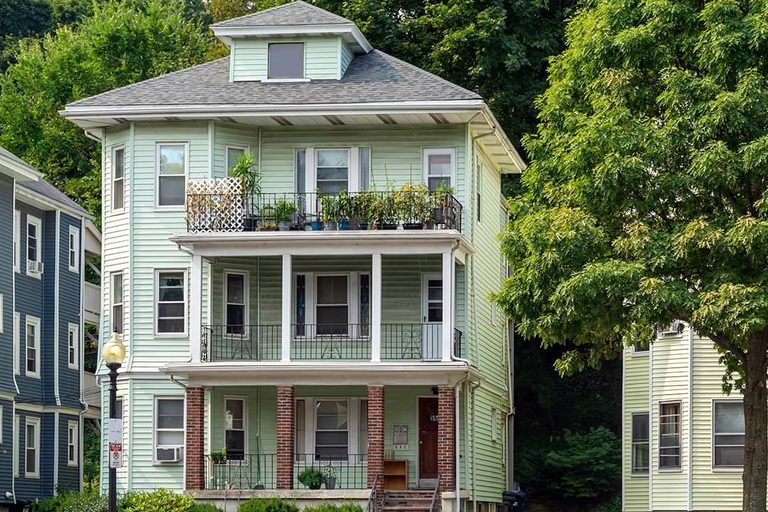
Rising home prices are prompting many families to look for homes that serve two purposes: a primary residence and a source of rental income. While Federal Housing Administration (FHA) loans are best known for helping first‑time buyers with low down payments, they also offer pathways for owner‑occupied properties that generate rent.
Owner‑occupied multifamily homes
FHA financing can be used to purchase eligible multifamily properties—duplexes, triplexes and four‑plexes. The borrower must occupy one unit as a primary residence, but the remaining units may be rented out. This “house hacking” approach lets rental income offset mortgage costs and can even be counted toward qualifying for the loan, though lenders typically discount projected rent to account for vacancies and expenses.
Accessory dwelling units (ADUs)
In addition to traditional multifamily buildings, FHA guidelines may allow rental income from a qualifying accessory dwelling unit (ADU) to be considered during underwriting. An ADU can be a basement apartment, converted garage, backyard cottage or other independent living space on the same lot as the primary home. Eligibility depends on appraisal results, property layout and local regulations.
Occupancy requirements
To use an FHA loan, the buyer must establish the property as a primary residence within 60 days of closing and intend to live there for at least one year. A property purchased solely as an investment does not meet FHA criteria. After satisfying the one‑year occupancy rule, the homeowner may move out and convert the home to a full‑time rental without refinancing, provided the original purchase was a legitimate primary residence.
Refinancing and loan assumptions
Some owners choose to refinance an FHA loan into a conventional mortgage after building equity or when interest rates improve. Refinancing is optional and not required simply because the home becomes a rental. FHA loans are also generally assumable, meaning a qualified buyer can take over the existing loan, but the new owner must still meet occupancy and other FHA requirements.
Key takeaways for prospective buyers
- FHA loans require as little as a 3.5% down payment and are available for properties with one to four residential units.
- Buyers must live in the home as their primary residence for at least one year.
- Rental income from qualifying units or ADUs can help meet underwriting standards, though lenders will apply conservative vacancy allowances.
- After the occupancy period, the home can be converted to a full‑time rental without mandatory refinancing.
- Assuming an FHA loan is possible, but the new owner must still satisfy the owner‑occupancy rule.
For families seeking both a place to call home and a way to generate supplemental income, FHA financing offers a flexible option that keeps homeownership at the core while allowing rental potential. As always, prospective borrowers should consult an FHA‑approved lender to confirm eligibility and understand the specific documentation required.
Original reporting: KTVZ (Central Oregon) — read the source article.