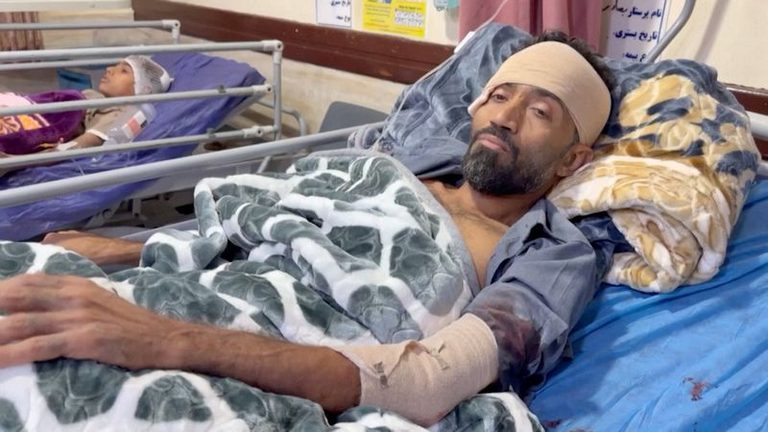
Washington and Cairo reported on Sept. 3 that a fresh wave of U.S. strikes across Iran left 18 dead and more than 100 wounded, according to Iran’s health minister. Among the victims were four people killed and dozens injured at a wedding near the Strait of Hormuz.
Escalation and regional fallout
Iran responded with missile and drone attacks it said targeted U.S. assets in Bahrain, Jordan, Kuwait and Iraq. Kuwait’s army confirmed that its air defenses intercepted additional missiles and drones early Thursday.
The latest exchange follows a lull in hostilities since July, when a brief flare‑up ended without a peace settlement. President Trump has warned of further force, even as the war remains unpopular at home and has driven up gasoline prices.
Political calculations ahead of the midterms
Top aides to President Trump are reportedly weighing whether to expand the campaign before the November 3 midterm elections, hoping to avoid Republican losses. Four sources familiar with the discussions said White House officials may consider ramping up military action after the vote.
Democratic members of Congress have called for the administration to release findings of an ongoing investigation into a separate U.S. strike that hit a school in Minab, killing 160 students. The Pentagon has not yet issued an official conclusion, and some officials suggest outdated targeting data may have contributed.
Humanitarian concerns
United Nations Secretary‑General Antonio Guterres expressed deep alarm over reports of civilian casualties, including the wedding attack, and urged an immediate cessation of hostilities. His spokesperson, Stephane Dujarric, reminded all parties of their obligations under international humanitarian law, emphasizing the principles of distinction, proportionality and precaution.
The Iranian Red Crescent Society released video showing debris and a large hole in a building’s roof at the wedding site, along with images of injured civilians in Red Crescent vests. Satellite imagery verified the damage, showing a utility tower 136 metres from the struck building.
Casualty totals and broader impact
Human Rights Activists News Agency (HRANA), an independent Iranian rights group, documented 3,636 deaths in Iran as of April 7, including 1,701 civilians. The U.S. has reported 18 military personnel killed and more than 750 wounded in the ongoing conflict.
U.S. Central Command spokesperson Navy Captain Tim Hawkins stressed that the U.S. military does not target civilians, contrasting its conduct with that of Iran’s Islamic Revolutionary Guard Corps.
Strategic objectives
President Trump has cited several reasons for the war: encouraging Iranians to overthrow their government, halting Iran’s nuclear program, and ending support for militant groups such as Hamas, Hezbollah and the Houthis. Iran, for its part, has threatened oil tankers that transit the Strait of Hormuz without Iranian authorization, potentially disrupting a waterway that previously carried about 20% of the world’s oil supply.
As the conflict continues, the administration faces the dual challenge of managing a costly overseas war while navigating a politically charged midterm election cycle.
Original reporting: Appleton, WI News Feed (HLL/CB) — read the source article.