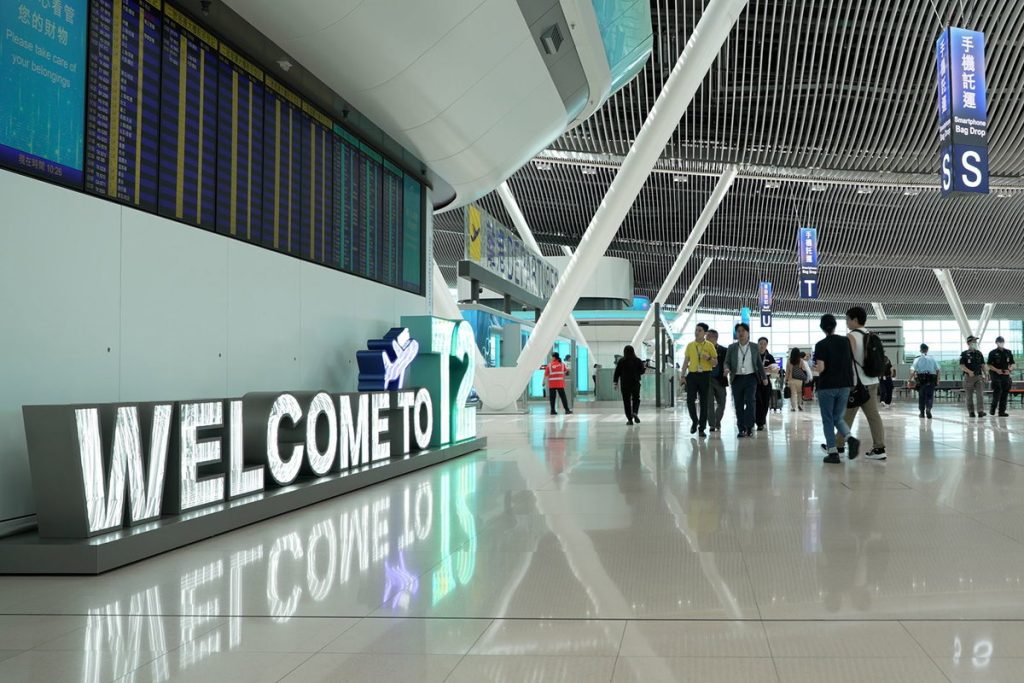
Hong Kong International Airport (HKG) has opened its newly renovated Terminal 2, marking a strategic move to bolster its position as a global aviation hub. The expansion comes as regional competitors like Singapore’s Changi Airport continue to enhance their offerings.
Technological Advancements and Passenger Experience
The revamped terminal, spanning 3.2 million square feet, incorporates advanced automated technology, including self-service bag drop points and smart check-in kiosks. An airport official noted that passengers could complete the check-in process in just 45 seconds, aiming to streamline the travel experience.
Targeting younger travelers, Terminal 2 features a variety of shopping and dining options, including a Filipino fried chicken chain and an arcade. The terminal’s design includes bright LED screens and a curved ceiling, enhancing the aesthetic appeal for visitors.
Strategic Positioning Amidst Regional Competition
Despite its strategic importance, the launch of Terminal 2 attracted limited public attention. Initially, only Hong Kong Airlines operated from the terminal, but other budget airlines like AirAsia and Hainan Airlines are expected to follow suit.
The expansion is part of a broader effort to attract more travelers, especially given the geopolitical shifts affecting air traffic. The ongoing conflict involving the US, Israel, and Iran has led to increased passenger numbers at Asian hubs, with Hong Kong seeing a 19.6% rise in March 2026 compared to the previous year.
Challenges and Opportunities
While the renovation faced cost overruns, swelling from an estimated $1.2 billion to $1.65 billion, it has received support from the Hong Kong government. The airport’s role as an international aviation hub aligns with Beijing’s strategic national plan for the semi-autonomous city.
However, Hong Kong faces stiff competition not only from Changi but also from nearby Chinese airports like Guangzhou and Shenzhen, which are rapidly expanding. Despite these challenges, Hong Kong’s proximity to mainland Chinese tourists remains a significant advantage.
As the airport seeks to rediscover its competitive edge, the success of Terminal 2 will be crucial in maintaining Hong Kong’s status as a key player in the global aviation landscape.
Original reporting: KRDO (Colorado Springs metro) — read the source article.