Los Angeles – After nearly three decades of speculation, a Las Vegas jury delivered a verdict in the murder of hip‑hop legend Tupac Shakur. Duane “Keffe D” Davis, 63, was found guilty Monday of first‑degree murder with use of a deadly weapon for the 1996 shooting that took Shakur’s life.
Family reacts to the verdict
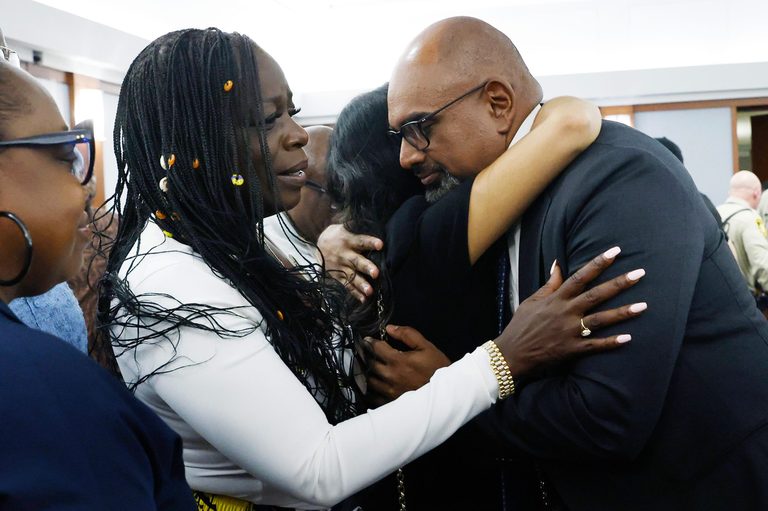
Shakur’s sister, Sekyiwa “Set” Shakur, broke down in tears as the verdict was read and later embraced prosecutors in the courtroom. She had called Davis’s 2023 indictment a “pivotal moment” and emphasized that accountability was the family’s primary goal.
Prosecutor Binu Palal echoed the family’s sentiment, noting that while Tupac was an icon to the public, to his loved ones he was simply a brother, son, and cousin taken from them thirty years ago.
What the prosecution proved
The state’s case centered on Davis’s role in planning the attack, not on pulling the trigger. Hours before Shakur was shot outside the MGM Grand after a Mike Tyson fight, surveillance captured Shakur’s entourage beating Davis’s nephew, Orlando “Baby Lane” Anderson. Prosecutors argued Davis obtained a firearm, assembled a group that included Anderson, and set out to retaliate against Shakur and Death Row Records co‑founder Marion “Suge” Knight.
While Davis was not accused of firing the fatal shots, the jury concluded he provided the weapon and orchestrated the assault, leading to his conviction after less than three hours of deliberation.
Community and cultural reflections
Hip‑hop commentator Chuck Creekmur said the verdict may give the Shakur family some measure of closure, but warned that conspiracy theories will likely persist. “I thought it was a closing chapter, but now I realize it’s just opening another chapter,” he said.
Radio host Charlamagne tha God, appearing on “The Breakfast Club,” reminded listeners that no legal outcome can bring a loved one back. “You’ll never truly have peace,” he said, noting the enduring impact of Shakur’s legacy.
Broader context of the East‑West rivalry
For years, the murders of Tupac Shakur and Christopher Wallace (The Notorious B.I.G.) were framed as a violent clash between East and West coast hip‑hop factions. Experts interviewed in the article argue that the rivalry was far more complex, involving personal feuds, gang affiliations, and business interests rather than pure musical competition.
Veteran journalist Dave “Davey D” Cook explained that Shakur’s New York roots and friendships defied a simple geographic split, and that the media’s sensationalism amplified a narrative that never fully captured the reality.
What comes next?
Clark County District Attorney Steve Wolfson said the office does not currently have enough evidence to charge anyone else in Shakur’s death. The unsolved 1997 killing of Christopher Wallace remains open, and speculation about additional participants in Shakur’s murder continues.
While the conviction provides a legal answer, many observers believe the lingering “open wound” of unanswered questions will keep the debate alive for years to come.
Original reporting: Alexandria, VA News – WTOP News — read the source article.