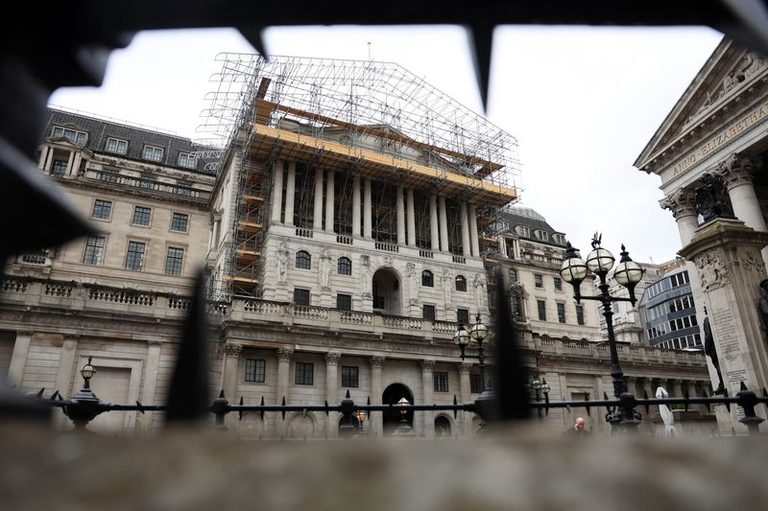
London – In a clear sign that the Bank of England’s (BoE) Indexed Long‑Term Repo (ILTR) programme is drawing in riskier assets, British banks pledged £1.9 billion of the highest‑risk “Level C” collateral at the weekly auction on August 18. That amount is the largest weekly pledge since March 2020 and three times the volume pledged the week before.
Level C collateral on the rise
Reuters’ analysis shows the BoE now holds roughly £17.8 billion of Level C collateral on its books, up from £8.7 billion a year ago and from under £1 billion in mid‑2024. The category includes loans linked to high‑interest store cards, vehicle leases with large balloon payments, and securitised mortgage‑backed debt – assets the European Central Bank (ECB) has recently barred from its own collateral pool.
Why banks are turning to the BoE
Commercial banks use cash held in BoE accounts for wholesale transactions. The ILTR facility lets them exchange a broad range of assets for that cash, while the BoE protects itself with higher interest rates and larger “haircuts” on riskier collateral. The programme was expanded after the BoE reversed the £895 billion of quantitative easing it carried out between 2009 and 2021, returning large amounts of liquidity to the financial system.
Risks and safeguards
Bank of England officials say the ILTR framework is designed with robust risk‑management controls. Nevertheless, experts warn that growing reliance on Level C assets could encourage lax lending standards. “The BoE has good reasons for accepting Grade C assets, but if it does too much it could spur bad lending,” said William Allen, a visiting fellow at the National Institute of Economic and Social Research and former head of the BoE’s money‑markets division.
The central bank mitigates risk by applying higher interest rates and larger haircuts, meaning it lends less than the full market value of the pledged assets. Still, Level C collateral now represents between a fifth and a quarter of all assets accepted at the ILTR, and its absolute value has more than doubled over the past year.
Industry reaction
Barclays fixed‑income analyst Moyeen Islam noted that the private‑market appetite for these assets may be waning, suggesting “the non‑BoE market for these assets might not be as active as it was because there’s a lower appetite for credit in private markets.” The global private‑credit industry, valued at $3.5 trillion, has faced heightened regulator scrutiny after a series of high‑profile losses.
Specific securities on the Level C list include Investec‑linked Temese Funding loan notes backed by heavy‑equipment and vehicle leases, and securities from Harben Finance – a Barclays‑controlled firm that holds payments on buy‑to‑let mortgages originated by the former Bradford & Bingley. Some tranches of these debts have been downgraded by Fitch Ratings and S&P Global in the past year.
Other assets include loan notes backed by KKR‑backed NewDay credit cards, aimed at higher‑risk borrowers, and debt issued in 2024 by the Small Business Origination Loan Trust, which packages loan payments from company owners who borrowed through Funding Circle’s platform. S&P Global warned that nearly one‑fifth of the loans in that pool could default, though Funding Circle declined to comment.
Looking ahead
The BoE says it continuously reviews its collateral framework to ensure alignment with its risk‑tolerance objectives. As the ILTR programme matures, the balance between providing liquidity to banks and safeguarding the central bank’s balance sheet will remain a focal point for regulators and market participants alike.
Original reporting: Appleton, WI News Feed (HLL/CB) — read the source article.