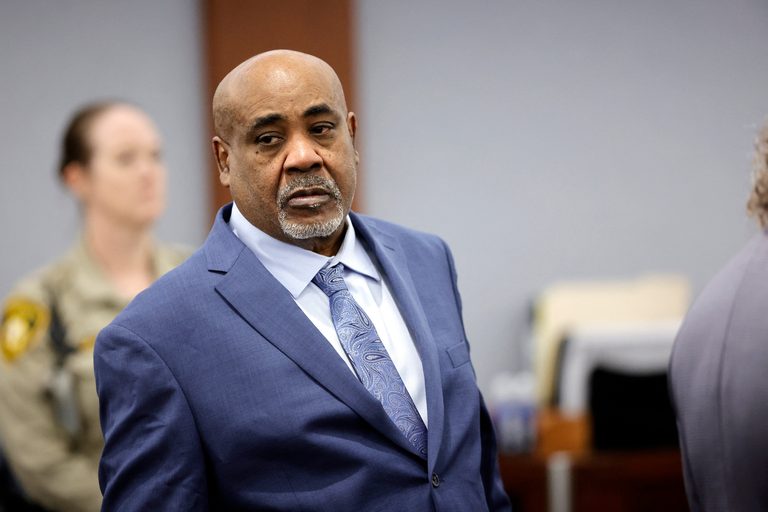
Closing arguments are set to start Monday morning in the Nevada trial of Duane “Keffe D” Davis, the only person ever charged in the 1996 murder of rap icon Tupac Shakur. Davis, 63, faces a single count of first‑degree murder with a deadly weapon and gang enhancements.
Prosecution’s case focuses on Davis’s own statements
Over the past weeks, the prosecution has leaned heavily on Davis’s past interviews and a 2019 memoir that revived public interest in the cold case. Prosecutors played clips from Davis’s YouTube videos, where he urged viewers to purchase his book for “the real truth,” and highlighted his harsh remarks about Shakur and the Las Vegas attack.
Key testimony included a 2008 police interview in which Davis allegedly admitted providing the gun used in the shooting and said his nephew, Orlando “Baby Lane” Anderson, fired the weapon. The defense argues that these statements are fabrications, with attorney Michael Sanft telling jurors that Davis is “full of crap.”
Alleged gang involvement and retaliation motive
Chief Deputy District Attorney Binu Palal told jurors that while Davis did not pull the trigger, he planned the shooting as retaliation for a brawl earlier on September 7, 1996, in which Shakur, his entourage, and Davis’s nephew were involved. The prosecution portrayed Davis as a high‑ranking “shot‑caller” whose authority would have been required for younger gang members to carry out the attack.
Former Compton gang detective Robert Ladd testified that Davis’s influence within the South Side Compton Crips meant the shooting could not have occurred without his approval. Ladd also described how the killing sparked a ten‑day gang war in Compton, resulting in three additional killings and ten attempted murders.
Trial timeline and potential sentence
The jury, composed of ten women and six men, has already heard testimony from roughly two dozen prosecution witnesses and three defense witnesses. After the defense presents its closing remarks, prosecutors will make their final case before the jury deliberates later that day. If convicted, Davis faces life imprisonment.
Shakur’s death remains a cultural touchstone. The rapper was 25 when he was shot multiple times while riding in a BMW near the Las Vegas Strip, moments after a heavyweight boxing match between Mike Tyson and Bruce Seldon at the MGM Grand. He died six days later; Death Row Records co‑founder Marion “Suge” Knight survived the attack.
Since his death, Shakur has been honored with a posthumous star on the Hollywood Walk of Fame, a street named after him in Oakland, and a forthcoming appearance as a character in the video adventure game “Stranger than Heaven.”
Original reporting: NBC4 Los Angeles — read the source article.