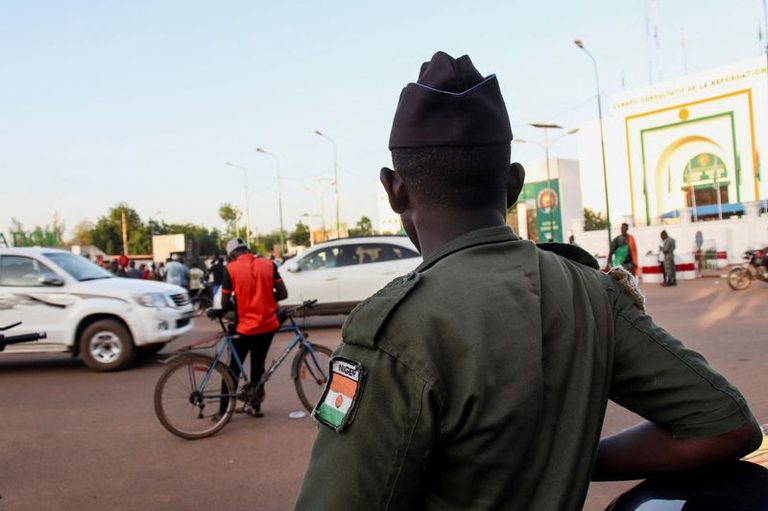
NIAMEY — The government of Niger said on Saturday that it has restored authority over the main military airbase in the capital after a mutiny by hundreds of disaffected soldiers. The incident, which erupted early Saturday with explosions and gunfire around the airbase and the presidential compound, marks the latest test for military ruler Abdourahamane Tiani as his administration battles a growing jihadist insurgency.
Mutiny and response
State media reported that the mutineers, drawn from units stationed in Niamey as well as from the regions of Ouallam, Tera and Dosso, seized parts of the airfield complex that also houses the civilian airport. Fighting lasted several hours before forces loyal to Tiani, including the Presidential Guard, were able to push the rebels back and re‑establish control.
The airbase is a strategic hub for Niger’s counter‑terrorism efforts. It hosts military aircraft, drones, and a unit of the Alliance of Sahel States (AES), a security partnership between Niger, Mali and Burkina Faso. Russian and Italian troops are also present, and the Kremlin‑controlled paramilitary group Africa Corps was asked to assist in neutralising the mutineers, according to Russian ambassador Viktor Voropaev.
Background of instability
This attack follows two earlier assaults on the same facility this year – one in January by an Islamic State affiliate and another in June by an al Qaeda affiliate. The mutiny highlights deepening frustration within the ranks of the armed forces, which have suffered repeated battlefield losses against al Qaeda and Islamic State affiliates operating across the Sahel.
Analysts say the unrest reflects broader discontent among frontline units that feel the government has not provided adequate support or clear strategy against the insurgents. The mutiny adds another layer of vulnerability for Tiani, whose administration has shifted away from Western partners, deepened ties with Russia, and broken with the regional ECOWAS bloc since seizing power in the July 2023 coup that ousted President Mohamed Bazoum.
Implications for Niger’s security and economy
Beyond the immediate security concerns, the incident occurs as Niger tightens control over its lucrative uranium sector, having recently seized assets from France’s Orano. Niger has historically supplied about 15 % of Orano’s uranium at full capacity, making the country a key player in global nuclear fuel markets.
President Tiani has not made a public appearance since the mutiny, and the government has not released casualty figures. Reuters could not independently verify the state media claims.
Regional context
The mutiny underscores the fragile security environment across the Sahel, where leaders in Burkina Faso, Mali and Niger face similar challenges in containing jihadist groups while managing internal dissent. Continued instability threatens both regional stability and the economic prospects tied to Niger’s natural resources.
Original reporting: Appleton, WI News Feed (HLL/CB) — read the source article.