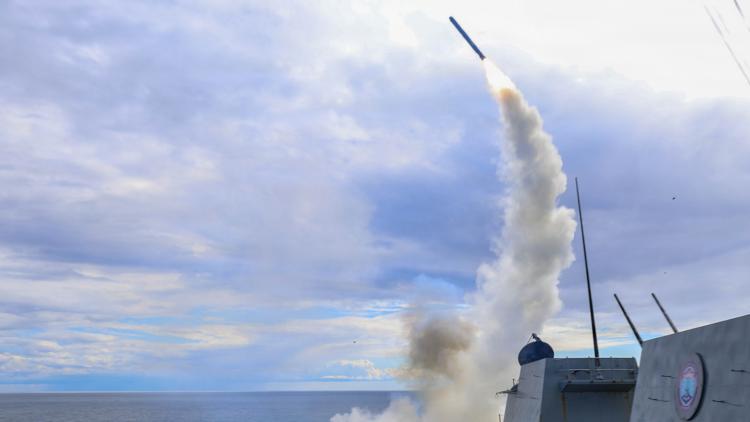
The United States is facing a significant challenge in replenishing its stockpiles of advanced weaponry following extensive use in the Iran conflict. Analysts warn that it could take at least three years to restore inventories of crucial systems such as Tomahawk cruise missiles, Patriot, and THAAD interceptors. These systems are vital for both offensive and defensive military operations.
Impact on Future Conflicts
The depletion of these stockpiles has raised concerns about the U.S. military’s readiness for potential future conflicts, particularly in the Western Pacific, where tensions with China over Taiwan continue to simmer. The Center for Strategic and International Studies (CSIS) highlighted this vulnerability in a recent report, noting the time required to rebuild these inventories as a major concern.
China has expressed ambitions to ensure its military can take Taiwan by force if necessary by 2027. While this is seen as an aspirational goal, the potential for conflict remains a pressing issue. Chinese President Xi Jinping has warned that mishandling relations with Taiwan could lead to a clash with the U.S.
Efforts to Accelerate Production
Under the Trump administration, a historic defense budget proposal of $1.5 trillion for 2027 aims to accelerate spending on high-end munitions. This builds on efforts initiated during the Biden administration. Despite bipartisan support in Congress for increasing inventories, the primary challenge remains the time needed to expand production capacity and build these complex systems.
Defense Secretary Pete Hegseth has emphasized the U.S. military’s capability to fight any war, urging defense contractors to speed up munitions production. However, military experts have expressed concerns about the critical levels of current stockpiles.
Historical Context and Industry Response
The roots of the current predicament can be traced back to the end of the Cold War when the U.S. assumed future conflicts would be short and regional, leading to smaller orders for high-end weapons. This assumption changed following protracted conflicts like Russia’s war with Ukraine, highlighting the need for deep inventories.
Manufacturers like Raytheon and Lockheed Martin are investing billions to boost production, with Raytheon aiming to increase Tomahawk missile production to over 1,000 per year. Lockheed Martin is also enhancing production capabilities for Patriot and THAAD systems, prioritizing U.S. needs.
While the situation presents challenges, the U.S. military’s recent operations against Iran and other adversaries demonstrate its capabilities. The CSIS report suggests that China’s lack of recent combat experience may serve as a deterrent until U.S. munitions inventories are restored.
Original reporting: WQAD (Quad Cities) — read the source article.