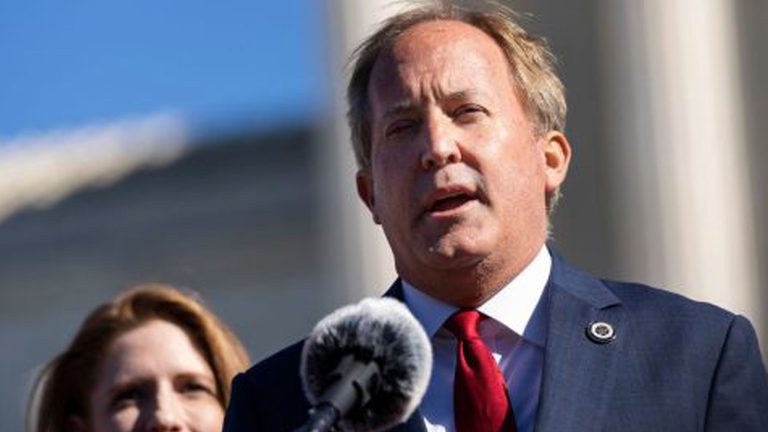
Dallas, Texas – Texas Attorney General Ken Paxton announced Thursday that he will immediately appeal a federal judge’s order blocking the state’s civil enforcement of Senate Bill 12. The law, which took effect on September 1, 2023, aims to keep sexually oriented performances away from anyone under 18.
Judge’s injunction
U.S. District Judge David Hittner of the Southern District of Texas found SB 12 unconstitutional and issued a permanent injunction on August 25, 2026. The order bars Paxton from using his civil authority to enforce the law’s Section One, which would penalize venue owners who allow a performance that features nudity or sexual conduct in the presence of a minor.
Judge Hittner denied Paxton’s request for a new trial, supplemental discovery, or any stay of the injunction. As a result, the attorney general cannot pursue civil penalties of up to $10,000 per violation or seek injunctions against businesses until the appellate process is resolved.
Paxton’s response
In an official statement, Paxton called the decision “profoundly flawed” and warned that the ruling endangers children. “I will appeal this decision immediately and continue to fight to protect our kids,” he wrote.
At the time of writing, no notice of appeal, emergency motion, or stay request appeared on the public docket.
What the law actually says
SB 12 does not use the word “drag” nor does it ban drag performances as a category. Instead, it defines a “sexually oriented performance” as a visual act that includes nudity or statutory sexual conduct and that appeals to a prurient interest in sex. Section One prohibits a person who controls a commercial venue from allowing such a performance in front of anyone younger than 18. Section Two permits local governments to regulate the same conduct, while Section Three creates a Class A misdemeanor for performing on public property or in a commercial venue where a minor is present, punishable by up to one year in jail and a $4,000 fine.
Legal background
The Fifth U.S. Circuit Court of Appeals previously vacated an earlier injunction in February 2026, but it did not declare SB 12 constitutional. The appellate panel left open “genuine doubt” about whether certain conduct—such as placing prosthetic breasts on audience members or allowing spanking—receives First Amendment protection for minors. Judge Hittner was tasked with applying the two‑step test from Moody v. NetChoice to determine which applications of the law are permissible.
In his analysis, Hittner concluded that the law imposes content‑ and viewpoint‑based restrictions that could reach protected expression far beyond the legislature’s intent. He cited hypothetical examples ranging from cheerleading and ballet to comedy acts, Dolly Parton impersonators, and Elvis tributes—none of which have been subject to actual enforcement in Texas.
Hittner also found Section One facially vague, noting that terms such as “prurient interest in sex,” “lewd,” and “performer” lack clear definition, potentially leading to arbitrary enforcement.
Next steps
If Paxton files the promised appeal, the Fifth Circuit will again become the primary decision‑maker. Until a higher court grants a stay or reverses the injunction, the attorney general remains barred from enforcing the civil portion of SB 12.
The ruling does not affect local prosecutors in Travis and Bexar counties, who did not appeal the original injunction and therefore may continue to enforce the criminal provisions of the law within their jurisdictions.
Original reporting: The Dallas Express — read the source article.