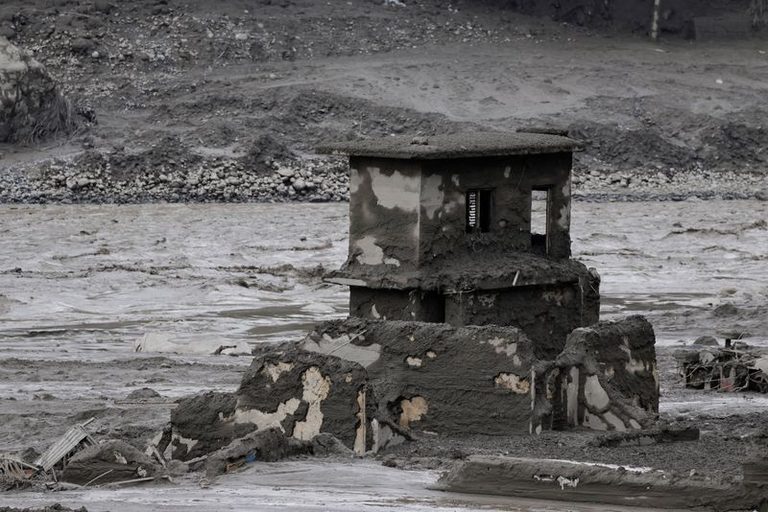
Rescue crews are combing the Himalayan border region of Nepal and China’s Tibet for survivors after a wall of mud and rock collapsed into the Lhende River on August 26, unleashing a devastating flood. The disaster has claimed at least 157 lives and left more than 400 tourists, including roughly 340 foreigners, missing.
Scale of the tragedy
Officials from Nepal’s tourism ministry confirmed that the missing include 47 Americans, 34 Australians, 33 Britons and 24 Canadians. The United States State Department said it is closely tracking the situation and monitoring Americans affected by the floods.
Videos released by Reuters and Chinese state media show massive torrents of water, debris and mud sweeping away homes, vehicles and entire villages. In the Nepalese districts of Nuwakot, Dhading and Rasuwa, locals gathered outside a Nepali army training centre – the hub for helicopter rescue operations – seeking information about missing family members. Police are recording names of the missing by the light of mobile‑phone flashlights as power remains out due to damaged hydropower infrastructure.
First‑hand accounts
Keshav Prasad Baral, a 68‑year‑old survivor, recounted how a “huge gush of mud” surged toward his home. He tried to pull his wife to safety, but she was swept away. A helicopter rescued him hours later, and he now fears his wife is still buried beneath the mud.
Another survivor described clinging to a mango tree as his house vanished. Health worker Tula Bahadur BK from Rasuwa told Reuters that five of his own relatives are missing and that “there is devastation everywhere we look.”
Cause and response
Early speculation suggested an earthquake might have triggered a glacier collapse, but the U.S. Geological Survey later clarified that the seismic energy recorded was generated by the collapsing glacial rock and ice, not a tectonic event.
Satellite imagery from Planet Labs confirmed that a landslide of ice and rock set off a debris‑laden flood in the Lhende River, about 20 km northeast of the Rasuwagadhi border crossing. Rescue helicopters have been unable to land in the hardest‑hit areas of Syapru Besi and Timure, leaving survivors dependent on air‑lifted aid.
International reaction
U.N. Secretary‑General Antonio Guterres announced that UN teams and partners are mobilising supplies and personnel to support affected communities. Canada’s Prime Minister Mark Carney called the floods “absolutely devastating.” Australian Prime Minister Anthony Albanese noted the difficulty of obtaining information in a developing country like Nepal.
China’s state broadcaster reported three deaths and 265 missing in the Gyirong port area, with roads, communications and power links severely damaged. South Korea, Malaysia and Japan also reported missing nationals working in the region.
Regional impact
The deluge prompted flood alerts in India’s northern states of Uttar Pradesh and Bihar, where authorities have evacuated roughly 5,000 people and plan to move up to 12,000 more from six districts.
As rescue operations continue, families on both sides of the border pray for the safe return of their loved ones. The disaster underscores the vulnerability of remote mountain communities and the importance of coordinated international aid in the wake of natural catastrophes.
Original reporting: Appleton, WI News Feed (HLL/CB) — read the source article.