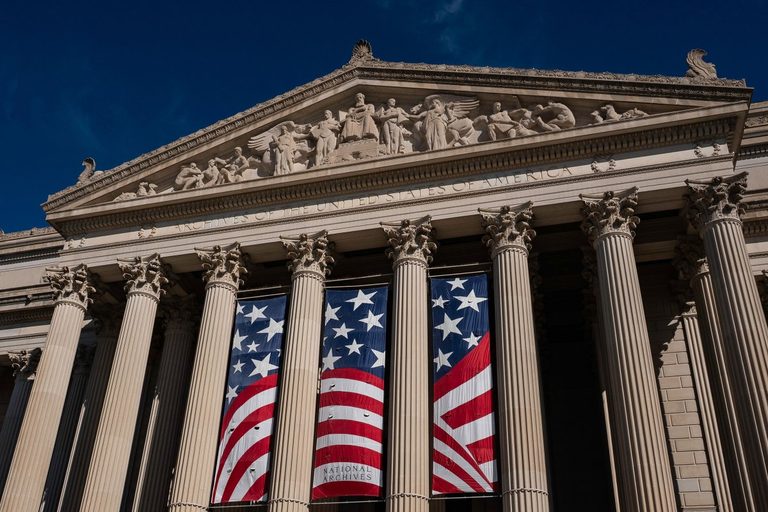
Six former leaders of the National Archives, who served under both Republican and Democratic presidents, have taken a rare step to defend the nation’s record‑keeping law. On Wednesday they filed an amicus brief with the U.S. Court of Appeals for the D.C. Circuit, urging the court to reject the Trump administration’s attempt to ignore the Presidential Records Act (PRA). The archivists argue that the PRA is essential for maintaining continuity of governance and protecting national security.
Why the PRA Matters
The Presidential Records Act, enacted after the Watergate scandal, requires the President and White House staff to preserve official records and turn them over to the National Archives at the end of an administration. The law ensures that incoming officials have immediate access to the data, strategy, and rationale behind past policy decisions, especially those involving the National Security Council, intelligence assessments, treaty negotiations, and operational contingency plans.
According to the former archivists, the most frequent request for preserved presidential records comes from the incoming president’s national‑security advisors. They stress that “geopolitical tensions do not pause for an inauguration,” and that losing access to these records could jeopardize the United States’ ability to respond to global crises.
Administration’s Position
The Trump administration, through the Justice Department’s Office of Legal Counsel, has argued that the PRA is unconstitutional and that the “lion’s share” of presidential records are already being preserved on White House‑issued phones. The administration’s view has been challenged by a May ruling from U.S. District Judge John Bates, who found the PRA likely constitutional and rebuked the Justice Department’s earlier stance. The administration has appealed that decision, and oral arguments are scheduled for October 16.
Legal Context
The brief supports a lawsuit filed by presidential scholars, historians, and transparency groups, including the American Historical Association and American Oversight. Those groups warn that without court intervention, critical documents could be “irretrievably lost,” hampering research and undermining accountability.
The archivists—Trudy Huskamp Peterson, John W. Carlin, David S. Ferriero, Debra Steidel Wall, Colleen Shogan, William J. Bosanko, and former agency counsel Gary M. Stern—emphasize that the PRA bridges the gap between outgoing and incoming administrations, ensuring that new leaders can evaluate active threats and maintain diplomatic momentum.
Implications for the Nation
If the appeals court upholds the administration’s effort to sidestep the PRA, future presidents could face gaps in critical information at the moment they assume office. Such gaps could affect decisions on defense, foreign policy, and emergency response, potentially endangering American lives and interests abroad.
Conversely, a ruling that enforces the PRA would reaffirm Congress’s authority to regulate presidential record preservation, a power affirmed by Supreme Court precedent. It would also reinforce the principle that government transparency and continuity are foundational to a constitutional republic.
The case highlights a broader debate over executive authority and the balance of powers, a debate that resonates with many Americans who value both strong leadership and the rule of law.
As the legal battle proceeds, the former archivists hope their brief will remind the court that preserving presidential records is not a partisan issue but a matter of national security and constitutional stewardship.
Original reporting: KTVZ (Central Oregon) — read the source article.