Washington — The U.S. military carried out a strike on a boat it said was being used to smuggle illegal drugs in the Caribbean Sea on Tuesday, killing four individuals. The operation is the latest in President Trump’s month‑long offensive against what the administration calls “narcoterrorists” operating in Latin America.
Rising Toll of Maritime Strikes
According to U.S. Southern Command, the strike raises the cumulative death toll from U.S. boat attacks to at least 227 people across 68 separate operations since the Trump administration began targeting drug‑smuggling vessels almost a year ago. The command said the vessel was intercepted along a known smuggling corridor, but it did not release any evidence that the boat was actually carrying narcotics.
Recent Operations Highlight Intensifying Campaign
Tuesday’s strike follows a similar operation two days earlier in the eastern Pacific Ocean, where two people were killed in a vessel suspected of drug trafficking. That attack came after a pause of more than two months in the U.S. campaign, signaling a renewed tempo under the current administration.
Expanding the Fight onto Land
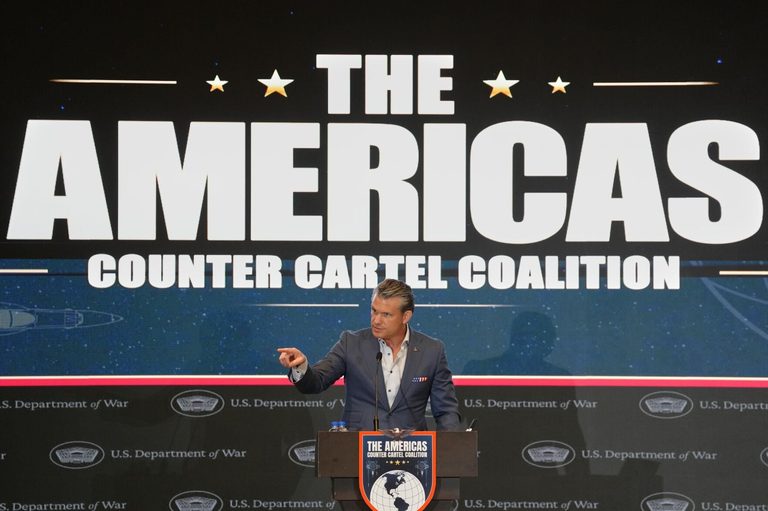
President Trump and his national security team are also seeking to extend the effort beyond the seas. Defense Secretary Pete Hegseth announced during a recent visit to Panama that Colombia, Guatemala and Honduras have agreed to allow joint U.S. military operations on their soil. While Guatemala denied reaching such an agreement, Ecuador launched comparable missions with the United States in March.
President Trump has repeatedly described the United States as being in an “armed conflict” with Latin American cartels, arguing that the escalated use of force is necessary to stem the flow of illegal drugs that fuel overdose deaths at home. Critics note that the administration has offered little public proof that the recent strikes have actually eliminated drug shipments.
Legal and Constitutional Context
The expanding use of force raises questions about the constitutional authority for overseas military actions and the balance of power between the executive and Congress. While the President retains broad war‑making powers, many lawmakers have called for greater transparency and oversight of operations that result in civilian casualties.
What This Means for Communities
For families and faith‑based groups concerned about the loss of life, the administration’s approach underscores a tension between protecting public health by curbing drug supply and preserving the sanctity of human life. Supporters argue that decisive action abroad ultimately safeguards American neighborhoods from the scourge of addiction, while opponents urge a more measured response that respects due process and international law.
The Trump administration says the campaign will continue until it can demonstrably disrupt the networks that fuel the opioid crisis at home. As the United States intensifies its maritime and land‑based operations, the debate over the appropriate scope of executive power and the moral implications of lethal strikes is likely to persist.
Original reporting: KTBS 3 (Shreveport) — read the source article.