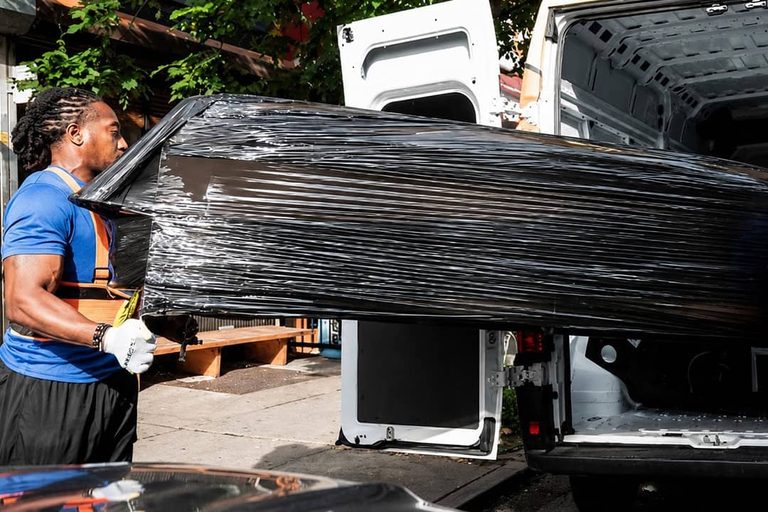
Labor Day has become one of the busiest weekends for on‑demand moving services. Lugg, an on‑demand moving and delivery platform operating in more than 4,000 U.S. cities, reports weekend volumes 13% to 26% higher than a typical late‑summer weekend over the past three years. The holiday Monday also sees a spike in activity.
The surge is not uniform across the country. Boston, where residential leases turn over on September 1, sees roughly double its usual weekend volume, while Los Angeles ranks next in double‑digit growth. The timing of the holiday consistently collides with each city’s peak moving day.
Turnover and Earnings Reality
Physical demands are high: movers must lift heavy, awkward furniture up stairs and through tight hallways. Of more than 5,000 movers who started at least five years ago, the median tenure was just 132 days, and fewer than one in ten remained after five years.
Two movers who have persisted illustrate different paths to profitability. Edgar Teran began in San Francisco as a helper with no vehicle, earning the platform’s helper rate of about $18 per hour. After renting a truck to test driver earnings, he purchased his own vehicle and now drives for roughly $28 per hour, plus uncapped tips that can exceed $1,000 a month for some.
Drivers receive mileage reimbursement and tolls, but they also bear vehicle depreciation, insurance, maintenance and, if rented, rental costs. Ownership is a clear advantage: more than two‑thirds of movers who stay beyond five years own a truck, compared with a small fraction of those who leave early.
Success Without a Truck
Seattle‑based Robert Wilson stayed on the helper side, completing over 4,500 moves without ever owning a truck. He built a reputation for selecting high‑pay jobs—especially long‑distance sofa deliveries—and for refusing slots he was unsure he could complete. Wilson says his expertise in assessing job feasibility and navigating tight spaces lets him earn enough to save for a vehicle and eventually purchase property.
Both movers stress that experience, measurement skills and a keen eye for job selection are more valuable than raw strength. Teran measures furniture, doors and stairways before a move; Wilson visualizes angles and pathways that others miss.
What the Data Shows
Lugg’s payment records indicate that the highest‑earning mover, Teran, has generated over $1 million in earnings since his first job in October 2016. The platform’s average rates vary by role and vehicle size, with standard cargo vans at the low end and sprinter vans at the high end. Tips are fully retained by movers and can significantly boost monthly income.
For newcomers, the path to a stable gig income involves hard work, responsibility and strategic choices about equipment and job types. Those who invest in a vehicle or develop a reputation for reliable, skilled service can turn a seasonal gig into a decade‑long career.
Original reporting: El Paso News (HLL/CB) — read the source article.