Tel Aviv – Israeli officials told the White House on Sunday that the proposed disarmament agreement with Hamas, announced by former President Donald Trump, presents “serious security concerns.” Doron Spielman, the spokesperson for Prime Minister Benjamin Netanyahu’s office, said Israel’s intelligence assessment indicates Hamas remains intent on rebuilding its military rather than truly demilitarizing.
Israeli Conditions for Withdrawal
Spielman stressed that the Israeli Defense Forces will not pull back from Gaza – where they currently control more than 60% of the enclave – until Hamas fully disarms. He warned that a premature redeployment could allow Hamas to quickly expand its presence, reconstruct its terrorist infrastructure, and launch another attack similar to the Oct. 7, 2023 assault that sparked the current war.
“Disarming means physically giving up the weapons. Nothing less,” Spielman said, emphasizing that any transfer of arms must be concrete and verifiable.
Details of the Trump‑Brokered Plan
Trump’s 20‑point ceasefire blueprint calls for Hamas to surrender all weapons and destroy its extensive tunnel network. The plan also envisions an Israeli withdrawal linked to a phased process, the arrival of a new technocratic Palestinian administration, deployment of an international security force, and reconstruction of Gaza’s infrastructure.
According to a copy of the agreement obtained by the Associated Press, weapons held by the Hamas‑run police would be transferred to a U.S.-backed Palestinian technocratic committee, the National Committee for the Administration of Gaza, once that body arrives in the enclave. The timeline for that transfer remains unclear, as it depends on other steps in the agreement.
Israeli Concerns About Verification
Two sources familiar with the deal said Israel raised several issues during negotiations. One point was the desire for freedom to conduct military operations in Gaza. Another was that Qatar and Turkey should not be involved in verifying the agreement’s stages. A further concern was that confiscated Hamas weapons be destroyed rather than merely stored.
Both sources spoke on condition of anonymity because they were not authorized to address the media.
Ongoing Violence and Civilian Toll
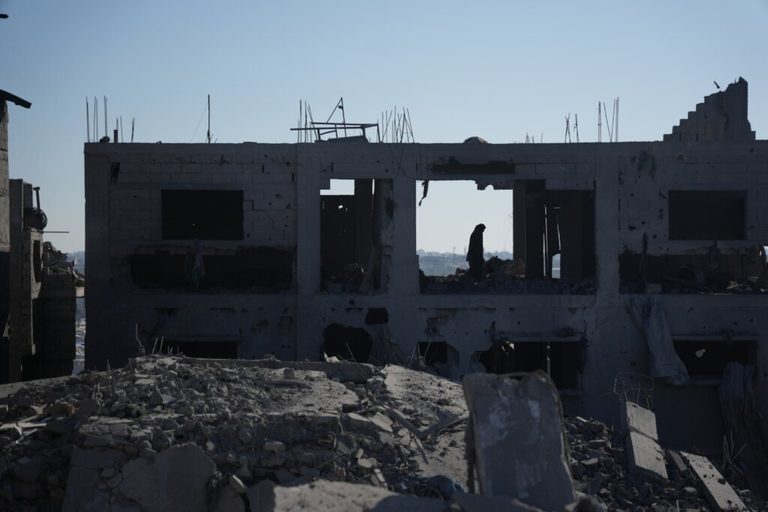
Even as negotiations continue, Israeli airstrikes have persisted. Local Gaza hospitals reported at least 17 deaths in the latest strikes, including children. One residential apartment in southern Gaza was hit, killing three family members, among them a four‑year‑old child, according to Nasser Hospital.
The Israeli military said the strikes targeted militant operatives, but the civilian casualty count underscores the conflict’s human cost.
Political Context
The timing of the disarmament talks coincides with Israel’s upcoming parliamentary elections in October. Prime Minister Netanyahu faces a tough reelection battle, with far‑right coalition partners urging him to maintain pressure on Hamas and keep forces in Gaza. Opponents accuse him of failing to prevent the Oct. 7 attack.
While Israel expressed appreciation for Trump’s commitment to its security, officials reiterated that any withdrawal must be tied to clear, verifiable disarmament steps. The White House declined to comment further on Sunday.
Original reporting: Alexandria, VA News – WTOP News — read the source article.