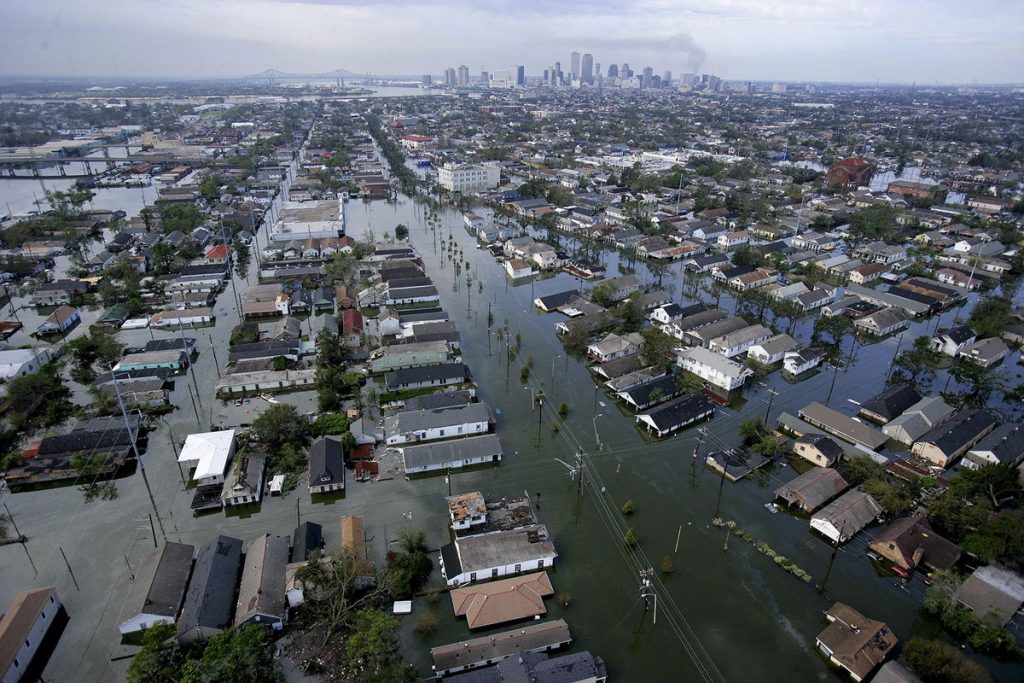
New Orleans, a city known for its vibrant culture and deep-rooted history, faces an urgent threat from rising sea levels. According to a recent analysis published in Nature Sustainability, the city could be surrounded by the Gulf of Mexico by the end of this century. Experts argue that relocation strategies must begin now to prevent chaos and preserve the community’s unique heritage.
Vulnerability and Challenges
New Orleans is situated in a bowl-shaped basin, mostly below sea level, and is surrounded by rapidly disappearing wetlands. These wetlands, crucial for buffering against hurricanes and storm surges, have been significantly reduced due to human activities such as development and canal dredging. Since the 1930s, Louisiana has lost approximately 2,000 square miles of wetlands, exacerbating the city’s vulnerability.
The study highlights that coastal Louisiana could experience a sea level rise of 10 to 23 feet, leading to the loss of 75% of its remaining wetlands and a shoreline retreat of up to 62 miles. This poses a significant risk to the city’s infrastructure and population, with 99% of residents at high flood risk.
Historical Context and Future Prospects
To understand the potential future, scientists examined Louisiana’s past, identifying an ancient shoreline formed 125,000 years ago when sea levels were at least 10 feet higher. This historical context suggests that similar sea level rises could occur again, prompting questions about the timing and nature of necessary interventions.
Since Hurricane Katrina in 2005, which resulted in significant population loss, New Orleans has experienced a ‘pulse-like’ retreat, with each major storm prompting further departures. Experts warn that without a managed relocation process, the city could face a chaotic retreat, disproportionately affecting its poorest residents and exacerbating existing inequalities.
Relocation: Challenges and Opportunities
While relocation presents challenges, such as potential cultural loss and increased rents, it also offers opportunities for sustainable development. The example of Kiruna, Sweden, which is undergoing a decades-long relocation due to mining activities, demonstrates that careful planning can preserve community spirit.
However, concerns remain about how relocation would impact New Orleans’ diverse communities. Beverly Wright, a long-time resident and environmental justice advocate, fears that relocation could fracture the city’s cultural fabric, particularly affecting Black communities that have historically faced inequitable treatment.
Despite these challenges, experts like Brianna Castro from Yale School of the Environment remain optimistic that New Orleans can build a ‘2.0’ version of itself on safer ground without losing its cultural essence. The city’s response to this existential threat could serve as a model for other coastal communities facing similar challenges in the future.
Original reporting: KRDO (Colorado Springs metro) — read the source article.