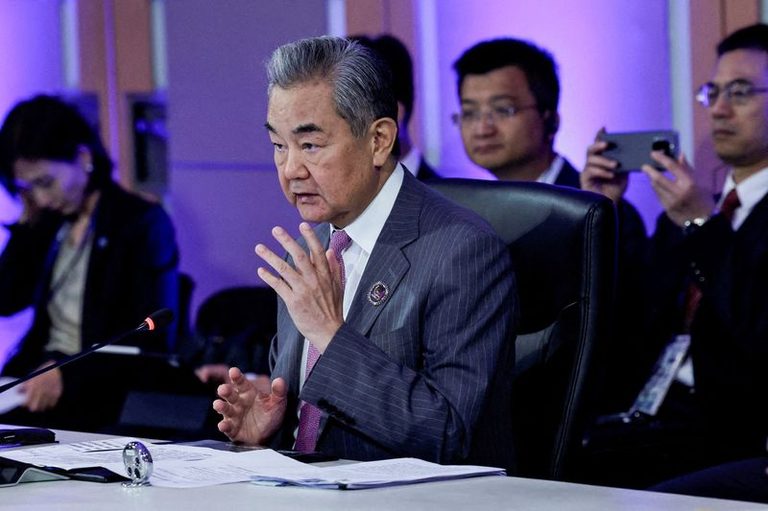
Seoul – Chinese Foreign Minister Wang Yi touched down in the South Korean capital on Wednesday for a series of high‑level meetings that underscore shifting dynamics on the Korean Peninsula. Wang is scheduled to hold talks and a dinner with South Korean Foreign Minister Cho Hyun, followed by a luncheon with National Security Adviser Wi Sung‑lac, and a meeting with President Lee Jae Myung on Thursday.
Agenda focuses on regional stability
The Seoul Foreign Ministry said the discussions will cover bilateral ties, broader Korean Peninsula issues and regional affairs. Both sides are expected to address the recent scaling back of U.S.–South Korean joint military drills, a move President Donald Trump ordered after indicating a willingness to meet North Korean leader Kim Jong Un again.
President Lee has also floated the idea of multilateral talks that would involve the parties to the 1950‑53 Korean War, seeking a lasting peace framework. Lee plans to attend the Asia‑Pacific Economic Cooperation (APEC) summit in Shenzhen later this year, where a possible summit between him and Chinese President Xi Jinping is being pursued.
China’s position remains steady
While China has not directly commented on Trump’s remarks, a spokesperson for the Chinese Foreign Ministry reiterated Beijing’s long‑standing stance that peace and stability on the peninsula serve the common interests of all parties. “Maintaining peace and stability on the Korean Peninsula and promoting a political settlement is in the common interests of all parties,” spokesperson Lin Jian said at a regular briefing.
South Korean Foreign Minister Cho, speaking in parliament, said he expects to discuss recent developments surrounding the military exercises and to explore ways to sustain dialogue amid the changing security environment.
Implications for regional diplomacy
The timing of Wang’s visit highlights the delicate balance between U.S. diplomatic overtures toward North Korea and China’s role as Pyongyang’s sole formal treaty ally. Analysts note that reduced joint drills may create space for renewed negotiations, but also raise questions about the future of the U.S.–South Korea security partnership.
Both Seoul and Washington have signaled a willingness to adjust their military coordination in hopes of encouraging North Korean engagement, a strategy that aligns with President Trump’s broader foreign‑policy approach of direct leader‑to‑leader talks.
Looking ahead
Wang’s itinerary continues on Thursday with a meeting with President Lee and a luncheon with the national security adviser. The outcomes of these talks could shape the diplomatic landscape ahead of the upcoming APEC summit in Shenzhen, where further discussions on the Korean Peninsula are expected.
For local readers, the visit underscores how global power shifts can influence regional security and trade, especially as South Korea remains a key economic partner for many U.S. businesses.
Original reporting: Appleton, WI News Feed (HLL/CB) — read the source article.