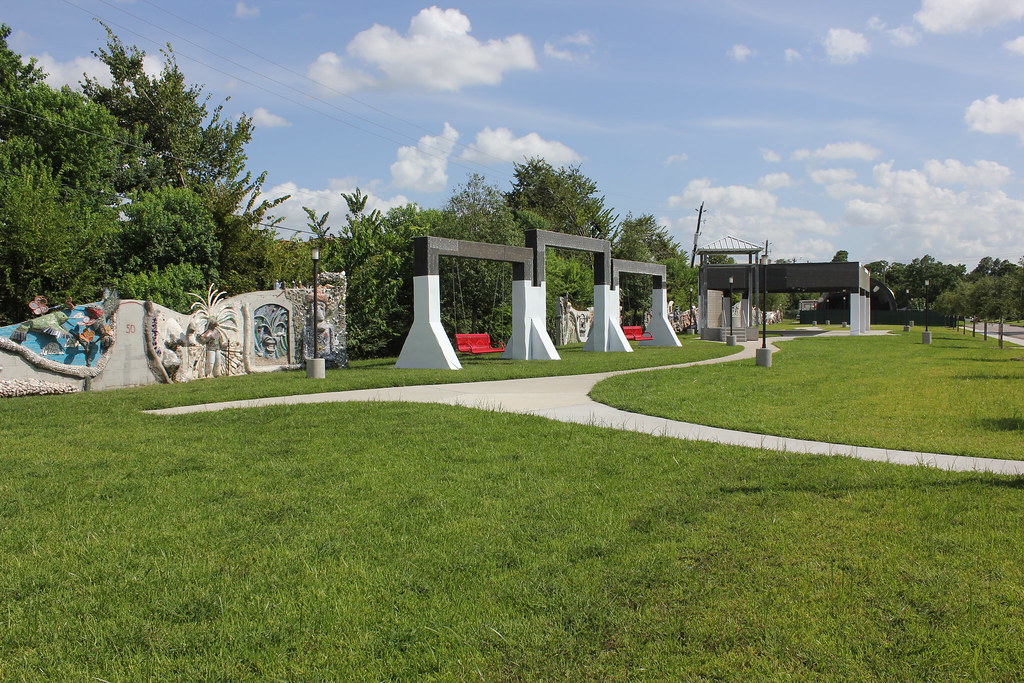
Tucked into the Eastwood neighborhood on the southeast side of Houston, Smither Park is one of those places that stops you mid-stride and makes you reach for your phone — not to scroll, but to take a photograph. Every surface, every curve, every bench and archway is covered in a mosaic of glass, tile, found objects, and folk-art brilliance that feels like stepping into someone’s most vivid dream. And the best part? It just keeps growing.
The park was conceived as a community mosaic project in honor of Jeff McKissack, the man who created the legendary Orange Show monument that sits just next door. After McKissack passed, artist Dan Phillips and the Orange Show Center for Visionary Art launched Smither Park as a living tribute — a space where volunteers, professional artists, and everyday Houstonians could contribute tiles, panels, and sculptures to an ever-expanding outdoor gallery. Today, the park stretches across more than an acre and features winding mosaic pathways, elaborately decorated benches, towering sculptural columns, a shimmering performance stage, and dozens of artistic installations that collectively feel like a patchwork love letter to Houston itself.
What makes Smither Park genuinely different from any other green space in the city is its collaborative soul. This is not a finished museum. It is a work in progress, and that energy is palpable the moment you walk through the gate. Volunteers show up on weekends to add new tiles. Local schoolchildren have contributed panels. Artists from across Texas have embedded their signatures into the landscape. You get the sense that the park is alive in a way few public spaces manage to be.
Plan to arrive with comfortable shoes and a willingness to wander slowly. The details reward patience — you will spot a glittering dragonfly embedded in a column, a hand-painted quote tucked into a garden wall, a ceramic fish swimming through a sea of blue tile along the ground. Bring a picnic if you like; there are shaded areas and enough visual stimulation to keep a conversation going for hours. The park is free and open to the public every day from dawn to dusk, which makes it an easy addition to any itinerary.
Smither Park sits at 2402 Munger Street, and parking is available along the surrounding streets. If you visit on a weekend morning, you may even catch volunteers actively working on the park, and most of them are happy to chat about what they have added and what is coming next. That openness and generosity of spirit is baked into everything here.
Houston is full of unexpected wonders, but Smither Park occupies a category of its own. It is playful and serious, communal and deeply personal, modest in footprint but enormous in imagination. Give it an afternoon, and you will leave with a genuine affection for what this city creates when it gives its people space to make something beautiful together.