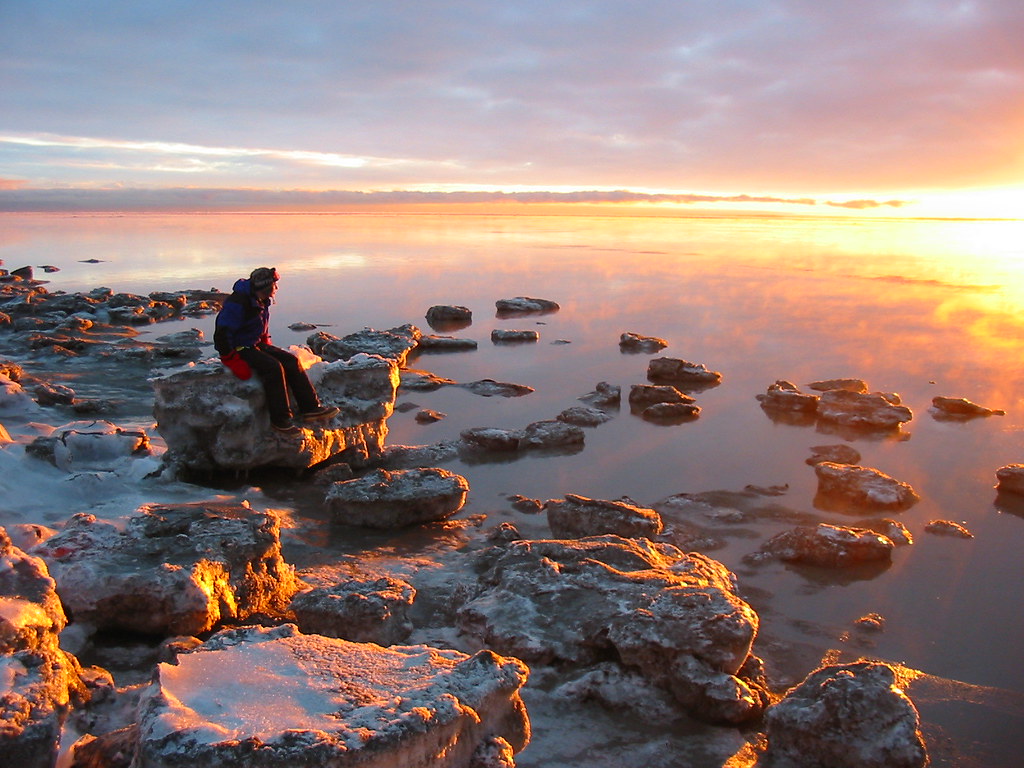
There is a moment, somewhere along Kincaid Park’s upper ridge trails, when the spruce trees thin just enough to hand you a view that stops you mid-stride: Cook Inlet glittering below, Denali floating on the horizon like a rumor made real, and the entire Anchorage Bowl spread out in afternoon light. That moment alone is worth the drive to the southwestern corner of the city, but honestly, it is just one of about a dozen reasons Kincaid Park deserves far more attention than it gets from visitors chasing the more obvious Anchorage highlights.
Kincaid sits on roughly 1,400 acres of forested, rolling terrain at the tip of the Anchorage peninsula, right where Turnagain Arm meets Knik Arm. The city manages it as a year-round recreational park, and the infrastructure here is genuinely impressive — over 60 kilometers of maintained trails that shift personalities with the seasons. In summer, those trails are open to hikers, mountain bikers, and trail runners who range from first-timers to serious athletes doing hill repeats on the steeper sections. In winter, Kincaid transforms into one of the premier Nordic skiing venues in North America, having hosted multiple national championship events on its immaculately groomed loops.
The park’s Chalet building serves as a practical home base regardless of when you visit. In warmer months, it is a welcoming spot to grab a trail map, use the restrooms, and get your bearings before heading out. The surrounding meadows near the Chalet are a classic spot for watching moose, especially in early morning. Seeing a cow moose grazing fifty yards from the parking area is entirely normal here, and it never really gets old.
For mountain bikers, Kincaid has developed a legitimate network of singletrack that threads through birch and spruce forests with just enough technical challenge to keep intermediate riders fully engaged. The flow trails near the lower sections are particularly satisfying — smooth, banked turns through dense woods that make you feel like you have earned some small measure of glory by the time you coast back to the trailhead.
What sets Kincaid apart from other Anchorage green spaces is how quietly ambitious it is. There are no entry fees, no crowds choking the trailheads, and no sense that the experience has been packaged and smoothed over for tourism. It feels like a place that belongs to the people who live here, which is exactly why visiting it feels like a genuine privilege.
Getting there is straightforward — head west on Raspberry Road from the New Seward Highway and follow the signs. Plan for at least two hours if you want to properly explore, and bring layers. The inlet breeze at the viewpoints can arrive without warning, and in Alaska, that is simply part of the deal. Pack accordingly, bring a camera you actually trust, and give yourself permission to take the longer loop back.
Kincaid does not announce itself loudly. It just delivers, every single time.