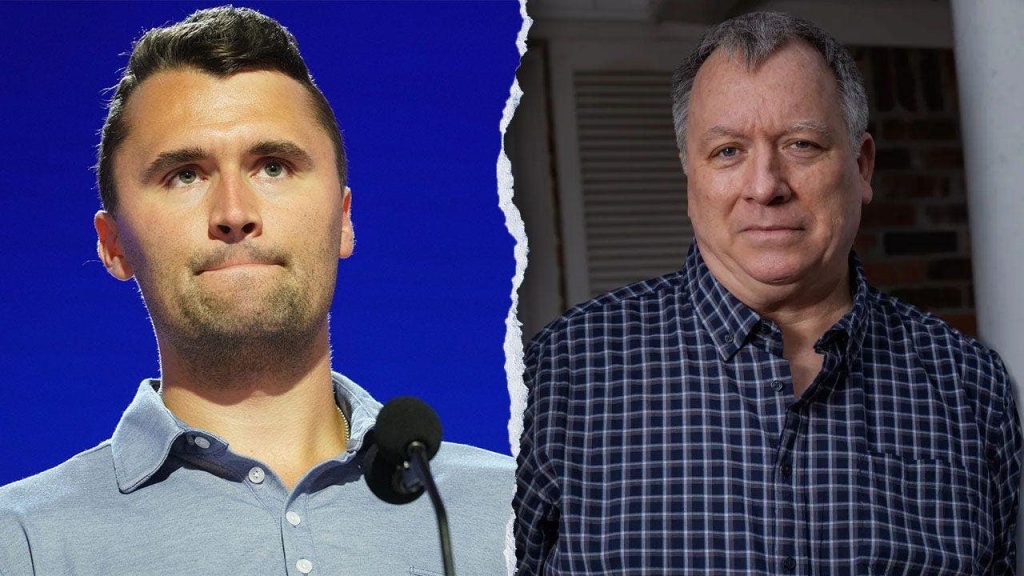
Larry Bushart, a 61-year-old retired police officer from Perry County, Tennessee, will receive an $850,000 settlement after spending 37 days jailed under a $2 million bond for refusing to remove a Facebook meme that mocked the assassination of Charlie Kirk. The felony charge was dropped in October and Bushart sued Perry County, Perry County Sheriff Nick Weems and the investigator who obtained his arrest warrant, with the Foundation for Individual Rights and Expression stepping in to represent him. The case has become a flashpoint over online speech, law enforcement discretion and what local officials can and cannot treat as a threat.
Bushart’s ordeal began in September when authorities arrested him after he declined to delete a meme that referenced Charlie Kirk’s killing. The image included a line attributed to Donald Trump, captioned to suggest a larger political commentary, and local officers concluded that some observers might read it as a threat to Perry County High School. He was booked, held on the hefty bond and forced to endure jail conditions while the charge hung over him.
During that 37-day stretch behind bars Bushart lost his post-retirement job, missed his wedding anniversary and was not there for the birth of his granddaughter, all consequences listed in his federal lawsuit. The emotional and financial fallout is central to why he pressed legal claims against county officials and the investigator who sought the warrant. Those personal losses are what make the $850,000 payout more than a headline number; it represents a recognition that severe mistakes were made.
The Foundation for Individual Rights and Expression took Bushart’s case and issued public statements on his behalf. “I am pleased my First Amendment rights have been vindicated,” Bushart said in a Wednesday statement announcing the settlement. “The people’s freedom to participate in civil discourse is crucial to a healthy democracy. I am looking forward to moving on and spending time with my family,” he added, underscoring that the case was as much about principle as it was about damages.
Perry County Sheriff Nick Weems has defended the department’s response while acknowledging the meme did not lead investigators to believe there was a real, specific plot. Weems told reporters that the prosecution decision was tied to how some people might interpret the post as threatening to a nearby school, a standard he argued justified caution. That caution, though, turned into harsh action when Bushart was taken into custody rather than being handled through less punitive means.
The arrest warrant itself was criticized for resting on what civil liberties advocates called an “absurd notion” that the meme could be read as a local threat. FIRE pointed out that Bushart neither created nor altered the meme, a fact that weakens any claim he intended to intimidate or incite violence. When officials treat shared content as criminal without a clear link to intent or capability, it raises troubling questions about who will be targeted next for speech that makes people uncomfortable.
Adam Steinbaugh, FIRE’s senior attorney, put that point bluntly. “No one should be hauled off to jail in the dark of night over a harmless meme just because the authorities disagree with its message,” he said, framing the settlement as a corrective but also a warning. That quote captures the Republican-friendly concern about government overreach and the protection of expressive freedom even when the speech is provocative or in poor taste.
Legal advocates also noted the wider pattern of people facing punishment for online remarks after high-profile violent incidents. FIRE referenced dozens of cases where Americans were censored, disciplined or worse following the killing of Charlie Kirk, and the group is representing other clients in similar disputes. One of those clients is Monica Weeks, a public servant who lost her job over a Facebook post criticizing Kirk shortly after his death, a case that highlights employment consequences tied to social media behavior.
The settlement with Bushart closes one chapter but leaves broader issues unresolved for Perry County and for law enforcement agencies across the country. How to balance school safety concerns with constitutional protections is a real question, and this outcome will likely make other local officials more cautious about pursuing criminal charges over online content. For defenders of free speech, the case is a reminder that civil defense and public advocacy groups will push back when government action looks disproportionate.
Residents in Perry County and lawmakers at the state level will be watching whether policy or training changes follow this settlement. Those changes could include standards on when a social media post becomes a criminal matter and what evidence is necessary to justify an arrest. Until then, the case remains a cautionary tale about the costs of rushing to criminalize speech instead of using measured, constitutional remedies.