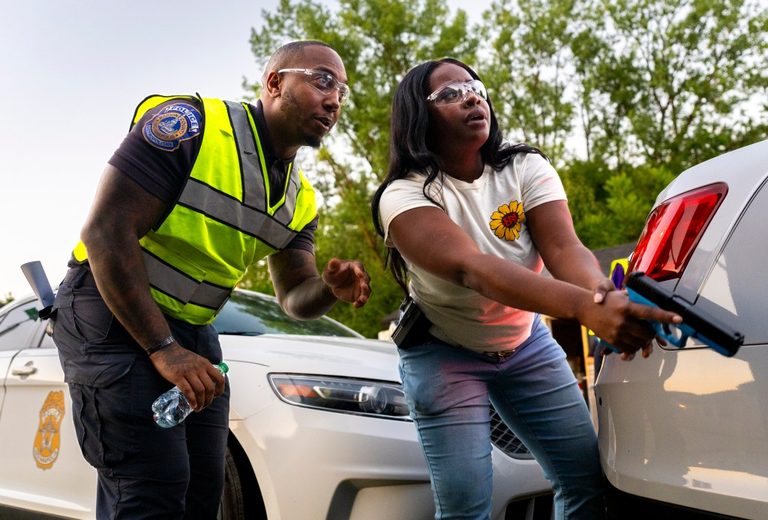
A journalist recently participated in an abbreviated version of the Indianapolis Metropolitan Police Department’s (IMPD) training regime. The goal of the session was to have participants walk away with a better understanding of the difficult decisions officers make when attempting to de-escalate or use force against potentially armed individuals.
Training Overview
The training began with a classroom session, where participants learned about the legal frameworks that guide IMPD’s training and policies. This was followed by scenario-based training, where participants were placed in simulated situations that could potentially turn deadly.
One of the scenarios involved a man wielding a machete, while another involved a traffic stop that escalated into a shooting. The journalist noted that the experience was surreal and highlighted the difficult decisions that officers must make in high-pressure situations.
Use of Force Policy
The journalist also learned about IMPD’s use of force policy, which is guided by the Fourth Amendment of the Constitution. The policy requires officers to weigh the need to use force against the potential risks and consequences. Factors that are considered include the officer’s experience, the availability of backup, and the severity of the suspected crime.
IMPD has also adopted strategies to avoid violent confrontations, such as creating space and barriers between an officer and an individual. Officers are also trained to use de-escalation tactics, including verbal communication and active listening.
The journalist’s experience with IMPD’s training regime left them with a greater understanding of the challenges faced by law enforcement officers and the importance of de-escalation techniques in reducing the risk of violent confrontations.
Original reporting: Mirror Indy — read the source article.