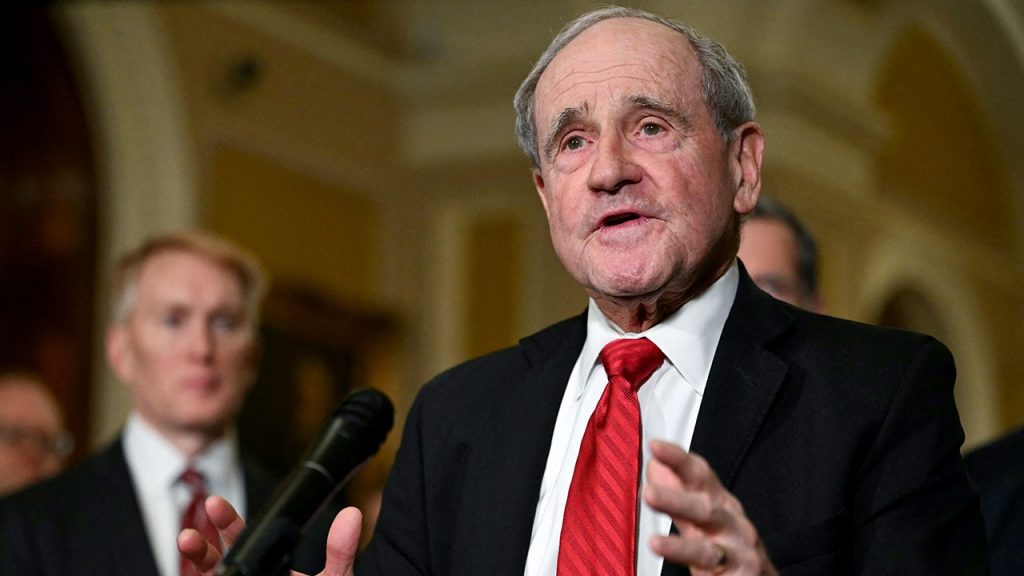
Sen. Jim Risch secured a clear victory in Idaho’s Republican primary, beating two GOP challengers and moving toward a fourth Senate term. The 83-year-old lawmaker, backed by former President Donald Trump, now heads into the general election carrying the weight of his role as chairman of the Senate Foreign Relations Committee. David Roth won the Democratic nod and former state Rep. Todd Achilles is running as an independent, keeping the field defined even as Idaho stays solidly red.
Risch’s primary win was decisive, reflecting his deep roots in Idaho politics and the state’s strong Republican tilt. Voters rewarded a long record of service rather than an experimental hand at the wheel, and the margin made clear where most Idahoans stand. At 83, Risch showed he still has the political instincts to navigate a tough primary and keep focus on November’s race.
President Donald Trump’s endorsement mattered here, and not just as a celebrity nod. Trump has consistently done well in Idaho since 2016, and his backing helped consolidate Republican voters behind the incumbent. For many GOP primary voters, alignment with Trump’s priorities remains a reliable signal of who will stand strong on conservative issues in Washington.
As chairman of the Senate Foreign Relations Committee, Risch occupies a seat few senators ever reach, with oversight of the State Department and a key say on ambassadorial picks. That role makes him central to debates that go beyond Idaho, shaping how the U.S. engages allies and adversaries. His committee perch means Idaho’s voters are effectively choosing who influences America’s diplomacy and who vets the people representing the country abroad.
TOP FOREIGN AFFAIRS REPUBLICAN PREDICTS US WON’T LEAVE NATO BUT WILL STRENGTHEN IT
Risch has been a consistent voice in Senate discussions on Iran, the crisis in Venezuela, and weapons sales to Israel, among other foreign policy flashpoints. Those are exactly the kinds of issues that test a chairman’s judgment and a senator’s commitment to American interests. In a period of global instability, Idahoans sent a signal they prefer continuity and experience at the helm of those debates.
Before Washington, Risch built a career in Boise, serving as governor and lieutenant governor before being elected to the Senate in 2008. That long arc from state hallways to the Senate floor gives him a blend of local allegiance and national responsibility. Voters who value steady, seasoned leadership point to that resume when deciding whom to trust with another term.
On the other side, David Roth emerged as the Democratic nominee, bringing his background as a realtor and past statewide bids into the race. Todd Achilles, who left the state legislature to challenge Risch, is running as an independent after a history as a Democratic lawmaker. Their presence keeps the general election lively, but Idaho’s track record suggests the statewide tilt will be hard to overcome for Democrats and independents.
Idaho has not elected a Democrat to the Senate in more than half a century, and this contest is among the GOP-held seats that national observers consider secure. Republicans control the Senate 53 to 47, and flipping the chamber would require an uphill climb for Democrats that includes winning multiple pickups this cycle. Senate Minority Leader Chuck Schumer’s effort to flip control is ambitious, but Idaho’s electorate shows little appetite for changing course in this seat.
With the primary behind him, Risch will head into November as a clear standard-bearer for conservative foreign policy and steady committee leadership. His reelection bid will test whether Idaho voters want to protect a powerful committee chair who helps shape U.S. diplomacy and confirms ambassadors. The coming months will reveal how much that record matters to turnout and whether challengers can make inroads in a state that has leaned reliably Republican for decades.