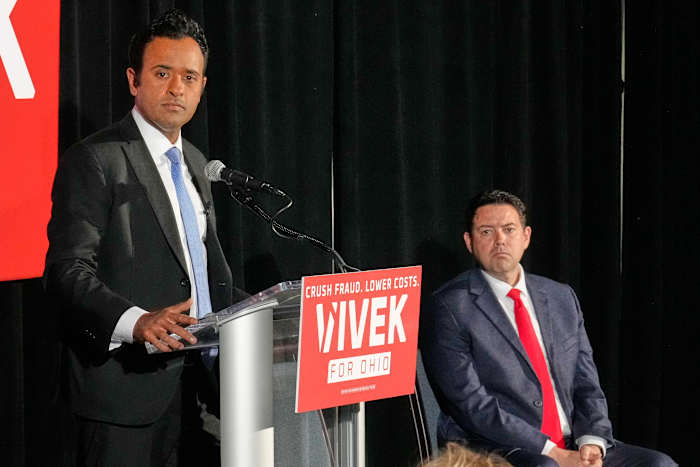
Vice President JD Vance has pushed his campaign against Medicaid fraud into his home state of Ohio, and that move has stirred a swift reaction among state Republicans, including his ally Vivek Ramaswamy. This article looks at what Vance’s decision means for Ohio politics, how it frames the party’s priorities, and why it has created a scramble across the GOP landscape. It examines the political upside for those who back aggressive oversight and the tactical headaches for those who prefer a lower-profile approach.
When a national figure like JD Vance reaches into state-level fights, it changes the tone of local politics immediately. Republicans in Ohio now face a clear choice between leaning into a narrative of tough governance and taxpayer protection or avoiding a public tussle with federal attention. That tug moves political conversations away from abstract policy and toward visible enforcement, and voters notice who wants to tighten the screws and who wants to keep things calm.
Medicaid fraud is an easy issue for Republicans to own because it ties directly to stewardship of public dollars and the promise to rein in waste. Vance’s move signals a message that fraud is not a partisan afterthought but a priority that must be pursued regardless of which states are involved. For many conservatives in Ohio, that kind of consistency is persuasive: it frames the party as serious about results, not just rhetoric.
At the same time, dragging a federal spotlight into state enforcement can complicate the work of officials who prefer a local-first approach. Some Republicans worry that federal intervention will politicize investigations, making routine accountability look like a partisan campaign. Others welcome the additional resources and publicity, seeing federal involvement as the fastest route to uncovering entrenched problems and delivering headlines that voters respond to.
Vivek Ramaswamy’s position as the GOP nominee for governor puts him squarely in the middle of the reaction. As a close ally, he benefits from shared messaging about rooting out fraud and defending taxpayers, but he also has to manage expectations on implementation. Ramaswamy needs to show Ohioans how state leadership will coordinate with federal efforts without surrendering local control or appearing reactive to outside pressure.
For grassroots activists and county-level Republicans, the scramble is practical as much as it is political. Campaign teams reassess talking points, donors want clarity on priorities, and volunteers look for a coherent narrative they can deliver to voters. That scramble is a test of party discipline: can Ohio Republicans present a unified front, or will internal debates over tactics spill into the open and hand Democrats an advantage?
The stakes are not only electoral; they are fiscal. Strong enforcement that reduces fraud can return money to essential services and strengthen public trust in government institutions. Republicans who emphasize accountability argue that voters reward tangible results that protect taxpayers, not vague promises. That argument is a natural fit for a party focused on limited government and fiscal prudence.
On the flip side, critics could portray the move as grandstanding if it looks like Washington is directing Ohio policy for political gain. Managing that perception requires clear coordination and transparency about the goals and methods of any joint operations. Republicans who want to avoid the appearance of overreach will press for local oversight mechanisms and clear benchmarks to prove that the effort is about enforcement, not headlines.
What matters going forward is how Ohio’s GOP translates attention into action while keeping the message tied to conservative principles. Whether JD Vance’s involvement becomes a rallying cry or a source of intra-party friction depends on practical follow-through and messaging discipline. For Vivek Ramaswamy and other state leaders, the immediate work is showing voters that fighting fraud is more than politics; it is a way to protect families, secure services, and keep government accountable.