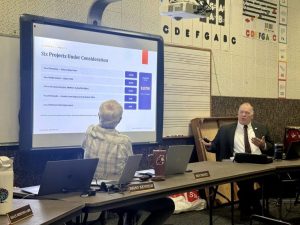
Meet Matt Moyer, superintendent of the Ft. Sumner School District in De Baca County, New Mexico, where fewer than 300 students attend the local K–12 campus. This piece follows the day that reshaped his approach to district leadership four years ago and how a small rural system wrestles with big challenges like funding, staffing, and community expectations. It tracks the practical choices Moyer has made since then and how the town of Ft. Sumner has leaned in to keep schools steady and hopeful. The story stays rooted in place, people, and the everyday work of running one of New Mexico’s smallest districts.
In a district that fits comfortably into a single building, being superintendent is a hands-on job. Matt Moyer handles everything from curriculum decisions to bus schedules to the realities of recruiting teachers willing to live and work in a tight-knit rural community. With under 300 students, every hire, every budget line and every extracurricular offering carries an outsized impact on daily life for families. That scale forces clear priorities: sustain core academics, support staff, and keep students engaged.
Rural schools like Ft. Sumner operate on razor-thin margins, and Moyer has been frank about the trade-offs. State funding formulas and grant cycles rarely account for the logistical costs of wide transportation routes, aging facilities and the fact that a single specialist teacher may serve multiple grade levels. Those structural pressures mean creativity is mandatory rather than optional. The district leans on multi-role staff, community partners and an almost constant search for supplemental funding.
Teacher recruitment and retention is one of those daily scrambles. Small towns struggle to match the salaries and amenities larger districts advertise, so Moyer and his team emphasize local culture and mission—sell the job as a chance to make a visible difference. They recruit from nearby colleges, offer housing guidance, and highlight the appeal of smaller class sizes and a strong community network. It’s not glamorous, but for educators who want to teach without losing students in crowds, Ft. Sumner can be magnetic.
Four years ago, a single day tested the district’s resilience like nothing before. The specifics of that day remain vivid to locals: systems were stretched, families were anxious, and the district’s response had to be immediate and human. Moyer called on neighbors, staff and regional partners to stabilize things and then set about changing policies so the school would be better prepared if history tried to repeat itself. The result was a sharper emergency plan, clearer communication lines and a renewed emphasis on community trust.
Small-school advantages show up in moments like these: rapid decision-making, strong personal relationships and a council of volunteers ready to help. Ft. Sumner parents, local businesses and county leaders have pitched in with time, donations and services that plug gaps the budget can’t cover. Those partnerships aren’t a stopgap so much as a feature of rural education—an informal safety net that often makes the difference between crisis and recovery. Moyer’s role has been to channel that goodwill toward sustainable changes rather than one-off fixes.
Beyond crisis management, the district has pushed toward practical improvements: targeted after-school programs, expanded career and technical options, and strategic use of grant dollars to upgrade classroom technology. These are small steps with big signals—students notice resources, families notice follow-through, and teachers notice support. For a campus of this size, the multiplier effect matters: a single successful program can lift morale and enrollment in ways larger districts might not feel as quickly.
Looking forward, Moyer talks about steady, incremental progress rather than sweeping reinvention. Strengthening teacher pipelines, maintaining facility upkeep, and continuing to build relationships with county and state partners top the list. The aim is simple and stubborn: keep the school open, healthy and relevant for the kids who live here. That’s the daily grind of rural school leadership, and in Ft. Sumner it’s work the whole town recognizes and values.
That recognition keeps the system afloat, even when the calendar hands the district another tight budget or an unexpected emergency. For Matt Moyer and the community in Ft. Sumner, resilience has become operational: robust plans, neighborly coordination, and a willingness to adapt. The campus may be small, but the stakes for each child are enormous, and the district’s choices reflect that reality every single day.