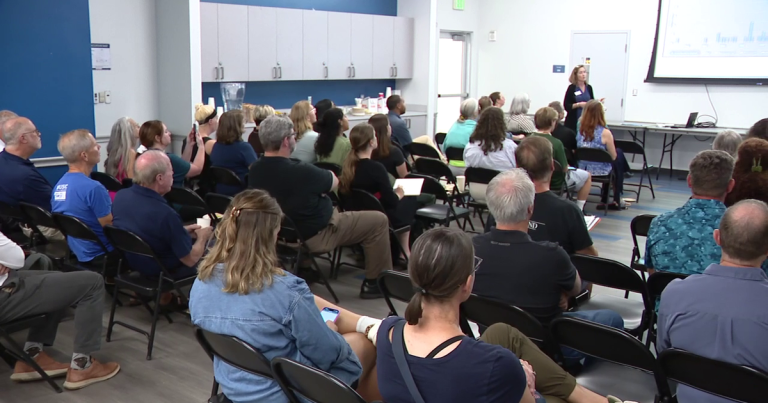
In Albuquerque, New Mexico, three Republican hopefuls for governor—Duke Rodriguez, Gregg Hull, and Doug Turner—met Tuesday night for a live debate that focused on the future of the state. The candidates traded views on key issues facing New Mexico voters, with a sharp focus on government spending, family policy, and whether the state should adopt a new Universal Childcare program. The evening exposed contrasts in tone and emphasis as each man tried to convince conservatives that his approach would deliver better schools, safer streets, and smarter budgets for families across the state.
The debate kept coming back to money and trust. Voters in Albuquerque and beyond are anxious about rising costs and the direction of state government, and the candidates tried to tap that energy by promising fiscal discipline and accountability. Duke Rodriguez, Gregg Hull, and Doug Turner each pitched variations on conservative reforms, stressing private-sector solutions and parental authority over one-size-fits-all state programs. At the center of the clash was whether New Mexico should expand government-run supports like Universal Childcare, or instead prioritize targeted help for struggling families while protecting taxpayer dollars.
Universal Childcare drew the hottest crossfire of the night because it touches both pocketbooks and values. Critics warned that a universal program swells the size of government, shifts responsibility away from parents and local communities, and risks unsustainable long-term costs. Supporters of private-sector alternatives argued that childcare should be affordable and flexible, delivered through incentives for providers, tax relief for families, and partnerships with faith and community groups rather than a blanket statewide bureaucracy. The three men debated whether the state should expand benefits broadly or tighten eligibility to reach those who genuinely need a hand-up.
Beyond childcare, the candidates pushed a common Republican line: stronger families and safer neighborhoods require less central control and more local accountability. They emphasized reforms meant to cut red tape, empower parents in education, and rein in spending that doesn’t deliver measurable results. That message resonated with the crowd because it folded together common conservative priorities—smaller government, better outcomes, and individual responsibility—into a straightforward agenda. Each candidate tried to prove he was the best steward of tax dollars while promising to protect traditional values that matter to many New Mexicans.
The tone varied as much as the details. Rodriguez leaned into his business background to promise efficiency and private solutions to public problems, Hull highlighted municipal experience from his time as mayor, and Turner pitched himself as a no-nonsense businessman who would weed out waste. They sparred but generally agreed that any expansion of social programs must be measured against clear evidence of effectiveness. Voters heard concrete criticisms aimed at big-government approaches and clear promises to pivot toward targeted assistance, not blanket offerings that could open a long-term liability for taxpayers.
Concrete fiscal questions framed much of the evening’s debate. Who pays for expanded childcare and how does the state avoid future deficits? Candidates warned that universal programs often create hidden, recurring obligations that constrict policy options down the road. They argued for prioritizing existing programs that protect the most vulnerable while promoting job-friendly policies that help families afford care without depending on a sprawling new bureaucracy. The debate was less about slogans and more about trade-offs, and the Republican lens made those trade-offs stark and immediate.
One moment crystallized the tension between broad compassion and prudent limits when a candidate paused and shouted out, “We […]”, leaving an unfinished line that seemed to capture the evening’s mixture of passion and caution. It underscored how debates can be as much about style as substance; voters want both conviction and clear plans. That clip, incomplete as it was, mirrored the broader scene: three contenders vying to show they can stand firm on conservative principles while addressing real hardships facing New Mexico families.
Audience reaction suggested that fiscal prudence and parental choice landed well among Republican-leaning viewers in Albuquerque. People applauded calls for transparency and accountability, and they pushed back when proposals sounded like an open-ended promise to spend more without measurable returns. The candidates left the stage having sharpened distinctions but without a consensus on whether Universal Childcare is a necessary expansion or a risky overreach. For GOP voters watching closely, the debate offered a chance to weigh leadership styles against a clear Republican critique of big government approaches.