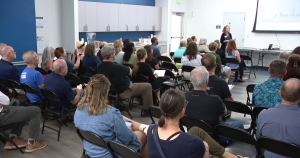
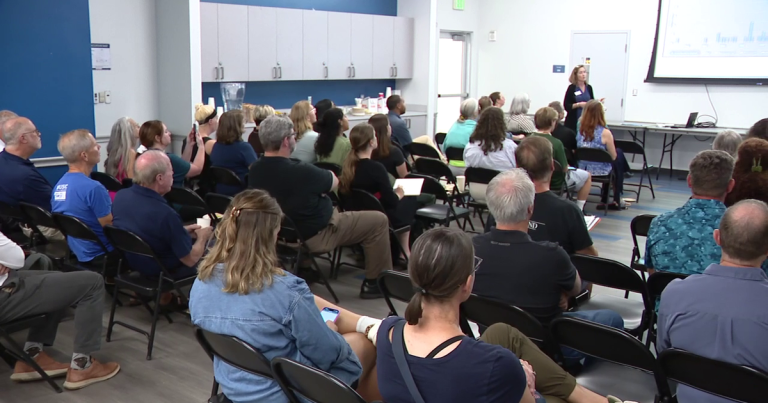
Three Republicans squared off in Albuquerque as the race for New Mexico governor tightened. Ultra Health CEO Duke Rodriguez, former Rio Rancho Mayor Gregg Hull, and businessman Doug Turner faced voters and each other, answering questions on the state’s priorities and hot-button policy ideas like the new ‘Universal Childcare’ program.
The debate had a clear purpose: give Republican voters a chance to see who can carry conservative principles into the governor’s office. Each candidate brought a different résumé and a different rhythm to the podium, but all were tested on whether government should expand into early childhood care. The room wanted straight answers, not political spin.
Duke Rodriguez carried the business executive tone into the discussion, emphasizing accountability and outcomes over promises. Gregg Hull leaned on his municipal experience and talked about how local leaders manage resources. Doug Turner framed his points around private-sector energy and the importance of not saddling taxpayers with open-ended commitments.
When the moderator moved to the ‘Universal Childcare’ question the exchange sharpened quickly. Voters in New Mexico are watching how a statewide program would affect family budgets and the state ledger, and the candidates had to square that reality with campaign rhetoric. The candidates debated funding, eligibility, and whether expanding state-run childcare would help or hurt local providers.
From a Republican angle the arguments were predictable and pointed: government expansion risks higher taxes, less parental control, and bureaucratic waste. Smaller government voices in the room argued that private providers and community solutions can scale without a one-size-fits-all program. There was a consistent theme about preserving parental choice and protecting family budgets from another unfunded mandate.
At several moments the candidates pushed past talking points into real policy trade-offs, discussing how the state would measure success and keep programs accountable. Questions about eligibility thresholds, the effect on rural providers, and whether the state would cannibalize existing childcare businesses drove a practical tone. Voters heard specifics about audits, transparency, and sunset clauses as ways Republicans think programs should be constrained.
The tone of the evening mixed respectful sparring with direct challenge, and the three men did not shy away from the reality that New Mexico’s fiscal picture requires tough choices. They traded notes on the need to grow wages and private-sector jobs so families can afford childcare without depending on state subsidies. The underlying message was that government should enable opportunity, not replace parents or local entrepreneurs.
One line stuck out in the back-and-forth, when a candidate began a reply with the clipped quote “We […]” and the moment underscored how high-pressure answers can be in a tight debate. Those few characters reminded the room that many answers come out in fragments and that voters will parse every pause and pivot. The candidates left the stage with clear signals about priorities even if every detail wasn’t pinned down.
For Republican voters in New Mexico the takeaways were sharp: fiscal discipline, parental authority, and market-friendly solutions topped the agenda. The debate in Albuquerque offered a clean test of who can articulate conservative alternatives to big government programs while offering practical ideas to help families. As the campaign moves forward, Republican primary voters will weigh who can best turn those ideas into policies that respect taxpayers and empower parents.