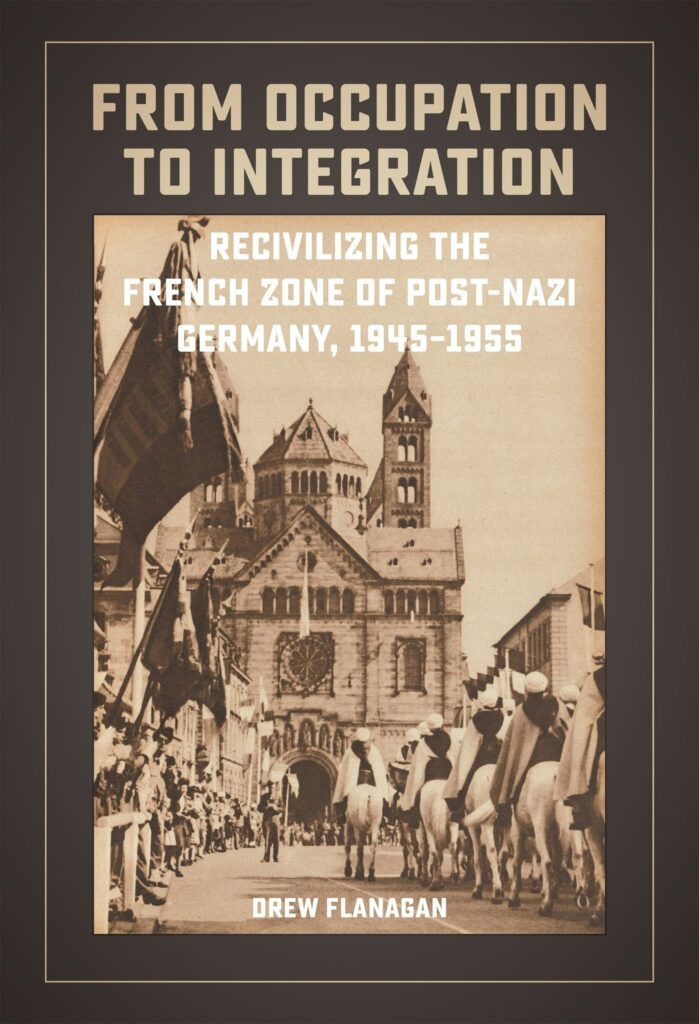
Dr. Drew Flanagan of the University of Pittsburgh at Bradford has written a new history that traces how a battered continent rebuilt itself after World War II. His book “From Occupation to Integration: Revitalizing the French Zone of Post-Nazi Germany, 1945-1955” explores the French zone, the broader Allied occupation, and the economic and security choices that shaped modern Europe. Published by LSU Press, the work speaks to scholars and readers interested in how wartime ruins became the framework for today’s political and trade relationships.
Flanagan’s narrative dives into the mechanics of occupation, showing how policy choices and practical needs pushed authorities toward reconstruction. He examines the French approach in particular, arguing that local conditions and political priorities drove a distinct path to integration. That approach, he says, mattered both for Germany’s recovery and for the emerging European order.
The research draws on documents and archives that have only recently become available or received fresh attention. Flanagan tracks how military government officials, local administrators, and economic planners handled shortages, displaced populations, and industrial repair. Those pragmatic decisions, taken amid shortages and political uncertainty, set patterns that lasted well beyond 1955.
One key theme is how occupation policy moved from control to cooperation as the Cold War reshaped priorities. Flanagan shows how security concerns and the need for stable trade networks encouraged Allied powers to relax strictures and favor economic ties. The French zone’s evolution into a piece of a wider integrated system illustrates that shift in practical terms.
The book pays attention to local actors as much as to high politics, giving space to German officials, labor leaders, and business figures who had to implement change on the ground. Flanagan does not treat the zone as a monolith; different regions and towns reacted to reconstruction in varied ways. This granular focus helps readers see how broad policy translated into everyday life for ordinary people.
Flanagan also connects the postwar decade to longer historical threads about sovereignty, borders, and economic order. He argues that rebuilding was never only about fixing factories or redistributing food, but about reimagining what nationhood and cooperation could mean after total war. Those debates about identity and governance influenced treaty-making and cross-border arrangements that came later.
The analysis includes an assessment of American influence and changing U.S. attitudes, showing how shifts in Washington tilted the balance toward integration and multilateral institutions. Flanagan treats U.S. policy seriously without reducing Europe to a mere backdrop for American strategy. Instead, he positions the French zone as a testing ground for ideas about economic ties and collective security.
Readers will find chapters that balance policy detail with anecdote, giving the book both scholarly heft and readable moments. Flanagan’s prose is direct, avoiding academic jargon while keeping arguments tightly supported by evidence. That blend makes the book suitable for graduate students, historians, and engaged general readers alike.
As Europe reevaluates its security and trade architecture in our time, this history offers a reminder that institutions and agreements grow out of messy, contingent choices. Flanagan’s study suggests that small administrative decisions and local bargains can have outsized effects on the long arc of international order. The book’s lessons will interest anyone watching how current debates may shape tomorrow’s alliances.
“From Occupation to Integration: Revitalizing the French Zone of Post-Nazi Germany, 1945-1955” is now out from LSU Press and available in both hardcover and e-book formats. Dr. Drew Flanagan’s work invites readers to reconsider the postwar decade not as a tidy beginning but as a contested and creative rebuilding process centered in places that had to make things work day by day.