The U.S. State Department has warned Americans away from travel to the Democratic Republic of the Congo after health officials confirmed a deadly Ebola outbreak centered in Ituri Province and spreading to cities such as Goma and Kinshasa; reporting on the situation has included contributions from the Associated Press, Melissa Rudy and Michael Sinkiewicz. The advisory was escalated from Level 3 to Level 4 as health and security risks mounted, with authorities pointing to a rarer Ebola variant and troubling gaps in local medical care. This article walks through the immediate public-health concerns, the specific travel restrictions in place, and why the Congo’s famed parks and volcanoes are suddenly off many itineraries.
The State Department’s jump to Level 4 emphasizes danger across multiple regions, notably Ituri Province in the northeast, but also cases reported in Goma and the capital, Kinshasa. Officials say the outbreak is driven by the Bundibugyo strain of Ebola, a less common variant that could blunt the effectiveness of existing vaccines. On the ground, health teams are racing to identify contacts and control transmission, yet the situation remains unstable and unpredictable.
As of Monday, Congo’s Health Cluster listed more than 390 suspected cases and 105 deaths, underscoring how fast the toll can climb when a virus like this takes hold. The State Department spelled out the clinical risk in blunt terms, calling Ebola a “rare, severe and often fatal hemorrhagic fever illness.” Those words are not just rhetoric; they reflect the harsh reality faced by patients and overstretched medical staff in affected areas.
The advisory also put limits on U.S. government travel inside the country, saying movement out of Kinshasa by American staff is restricted “due to safety risks.” That constraint reflects both the health emergency and wider security concerns that complicate response efforts. When diplomats and aid workers can’t move freely, delivering vaccines, supplies and personnel becomes exponentially harder.
Embassy services are constrained as well: “The U.S. embassy has extremely limited ability to provide routine or emergency consular services outside of Kinshasa,” the advisory warned. For Americans who become sick, injured or detained beyond the capital, official assistance could be slow, limited or unavailable. That reality shifts much of the immediate risk management onto individual travelers and local partners, who may not have the resources to handle complex medical emergencies.
Public health warnings went further, blunt about the state of care available locally: “The local health infrastructure is inadequate. Health services, hygiene and quality control do not meet U.S. standards of care. Pharmacies are not well-regulated. Locally available medications may be unsafe,” the advisory noted. Those sentences together describe an environment where even routine ailments can become dangerous because diagnostics, infection control and supply chains are unreliable.
Security concerns add another layer of risk. The State Department highlighted common petty crime and a spike in violent offenses, and cautioned that “Criminals may pose as police or security agents.” Travelers are told to be vigilant because impersonation can lead to robbery, extortion, or worse. That risk is compounded by the advisory’s note that “Local police do not always inform the U.S. embassy when they arrest a U.S. citizen. They may also delay access to detained U.S. citizens or use violence and threats during interrogations.”
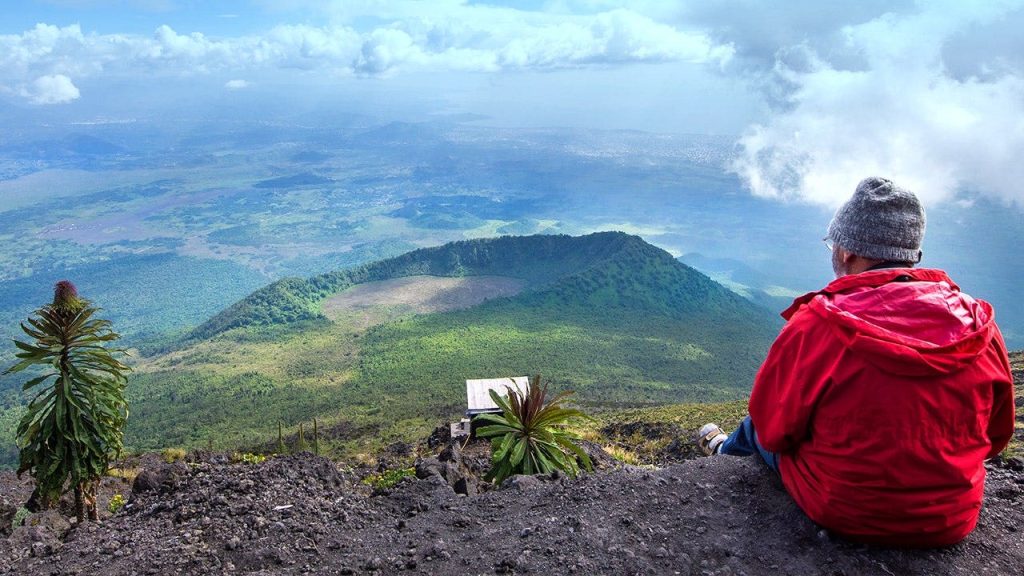
For travelers who used to think of the Congo as an ultimate adventure destination, the calculus has changed. The country’s draw—Virunga National Park, the Congo Basin rainforest, and Mount Nyiragongo with its massive lava lake—still exists, but those natural wonders are now accessible only with heightened caution and often not at all for foreign visitors. Even before the outbreak, infrastructure and security challenges made travel here tougher than in many other African nations.
Health teams and international partners are working to contain the outbreak and limit spread, but the combination of a less common Ebola strain, strained medical facilities and local security threats has pushed U.S. officials to the most severe advisory. For Americans with planned travel to the country, the message is clear: reassess and, where possible, postpone until conditions improve and health services stabilize. The names attached to reporting on this crisis include the Associated Press, Melissa Rudy and Michael Sinkiewicz, who have tracked developments and relayed official statements as events unfold.