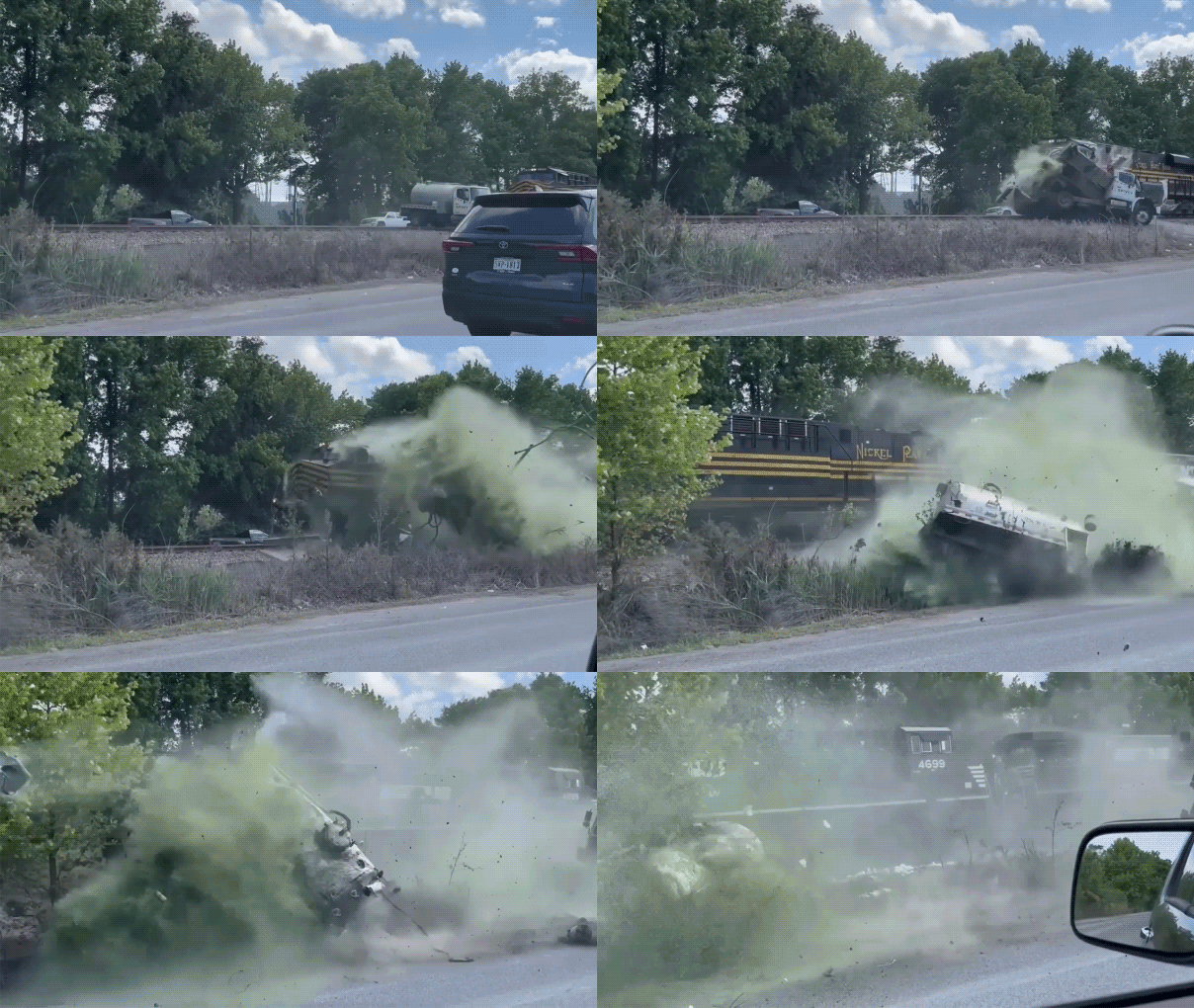
A freight train struck a septic truck at a private railroad crossing in Chesapeake, Virginia, on May 14 around 4 p.m., sending the truck tumbling and releasing sewage across the tracks. The Chesapeake Police Department says preliminary findings point to the truck driver failing to stop at a posted stop sign, and Norfolk Southern confirmed no one on the train was injured. Azuriah O’Daniel, who captured dramatic video, said the train conductor sounded a horn to warn the truck driver, and local crews managed a minor fuel-related hazmat situation at the scene.
The moment of impact was captured on a bystander’s video and it is startling to watch. The septic truck was struck in a T-bone collision as it attempted to cross the rails, and the force of the train sent it onto its side. Tank material spilled out, covering part of the crossing and creating an immediate clean-up and public-safety task for emergency crews.
Officials with the Chesapeake Police Department posted early findings that raised the stop sign as a likely factor in the crash. “Preliminary findings indicate that the truck failed to stop at a posted stop sign prior to the collision,” the department said, and they noted the investigation is ongoing. That language points toward driver error as the primary lead investigators are pursuing while they piece together the full sequence of events.
Onlookers at the scene described the terrifying sound and the surreal sight of a large tanker tipped on its side. Azuriah O’Daniel, who filmed the collision, said the train conductor used a loud horn to warn the truck driver of the oncoming locomotive. “I don’t think a lot of people realize they’re not cars. They don’t have rubber tires,” O’Daniel said. “It’s steel rails with steel wheels. When you grind those two together, that’s instant sparks.”
The crossing itself is private and lacks the crossing gates and flashing lights you would see on busier public crossings. That absence of active warning devices is a significant context point for investigators and for anyone who uses that stretch of track. Private crossings often rely on posted signs and driver vigilance, which increases the risk when someone fails to heed a stop sign or misjudges an approaching train.
Emergency responders found the overturned driver with life-threatening injuries and transported him to a hospital, where he was later listed in stable condition. Authorities have not released his identity while notifications and medical updates proceed through proper channels. Crews on site also reported a minor fuel-related hazmat situation, which officials said did not pose an immediate danger to the public but required careful containment and cleanup.
Norfolk Southern confirmed that no one aboard the freight train was hurt, a small mercy given the scale of the collision. The company and local responders coordinated to clear the area and assess damage to both the train and the private crossing infrastructure. Repairing tracks and addressing environmental contamination from the spilled septic contents will take time and a coordinated response from multiple agencies.
Footage from the scene highlights how quickly a routine crossing can turn into an emergency and serves as a reminder that trains cannot stop on a dime. The physics involved—steel wheels on steel rails and the massive weight of a freight consist—mean trains carry far more momentum and far less braking responsiveness than highway traffic. That reality is often missed until an incident forces it into view.
Investigators will comb through surveillance, witness accounts, and the onboard data to determine the precise chain of events. Because the crossing is private, questions about signage, sight lines, and road design may factor into any civil or regulatory follow-up. The Chesapeake Police Department has made clear the case remains under active investigation, and the community is watching for any additional findings that could point to liability or safety improvements.
Cleanup teams worked to remove contaminated material and secure the wreckage, and transportation officials will evaluate whether upgrades to that crossing are needed to prevent a repeat. In the meantime, local drivers are reminded to treat every rail crossing with caution, stop where signs require it, and never assume a train can slow down in time to avoid a collision. The wreckage and cleanup will be a visible reminder in Chesapeake for some time as the investigation and repairs proceed.