There are cemeteries, and then there is Grove Street Cemetery. Tucked just a few blocks from the bustle of Yale’s Old Campus in the heart of downtown New Haven, this extraordinary landmark has been quietly captivating visitors since 1796. Walk through its iconic Egyptian Revival brownstone gateway — one of the most photographed architectural details in the entire city — and you step into something genuinely unlike anything else Connecticut has to offer.
Grove Street Cemetery holds the distinction of being the first chartered burial ground in the United States to organize graves by family plot, a practice that was genuinely revolutionary at the time and shaped cemetery design across the country for generations. That history alone would be reason enough to visit, but the real draw is the atmosphere. On almost any given afternoon, you will find students reading on the grass, historians making careful notes beside weathered headstones, and curious travelers wandering the wide, tree-lined paths with their phones out, trying to capture the play of light through the elm canopy.
The grounds are an open-air gallery of American funerary art spanning more than two centuries. Ornate obelisks stand beside simple slate tablets carved with winged hourglasses and weeping willows. The craftsmanship is extraordinary, and the variety is endless. Plan to spend at least an hour just exploring the stonework — you will keep finding details you missed on your last pass.
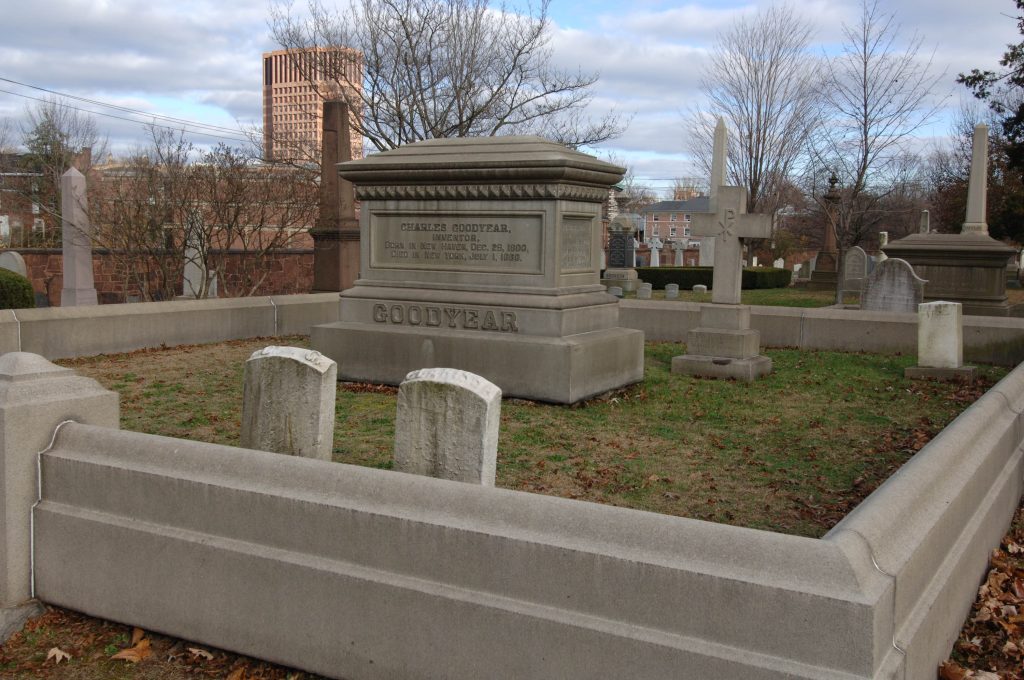
Then there are the residents. Grove Street is the final resting place of some of the most consequential figures in American intellectual and scientific history. Eli Whitney, who invented the cotton gin and pioneered the concept of interchangeable parts, is buried here. So is Noah Webster, the lexicographer who essentially gave the young United States its own dictionary. Charles Goodyear, who discovered the vulcanization of rubber, rests here too, along with Roger Sherman, the only Founding Father to sign all four of the great state papers of the American Revolution. Walking among these graves is not morbid — it is genuinely moving.
Grove Street Cemetery is open to the public daily from eight in the morning until dusk, and admission is completely free. The cemetery is located at 227 Grove Street, right at the corner of Grove and Prospect, making it an easy addition to any walking tour of the Yale campus or the Hillhouse Avenue neighborhood. Guided tours are offered periodically through the Friends of Grove Street Cemetery, and they are absolutely worth scheduling around if you can.
Come in October when the maples turn and the late afternoon light goes golden, and you will understand immediately why so many people consider this place one of New Haven’s most quietly spectacular destinations. It is peaceful, it is beautiful, and it carries the full weight of American history in every carved stone. Do not walk past the gate without going in.