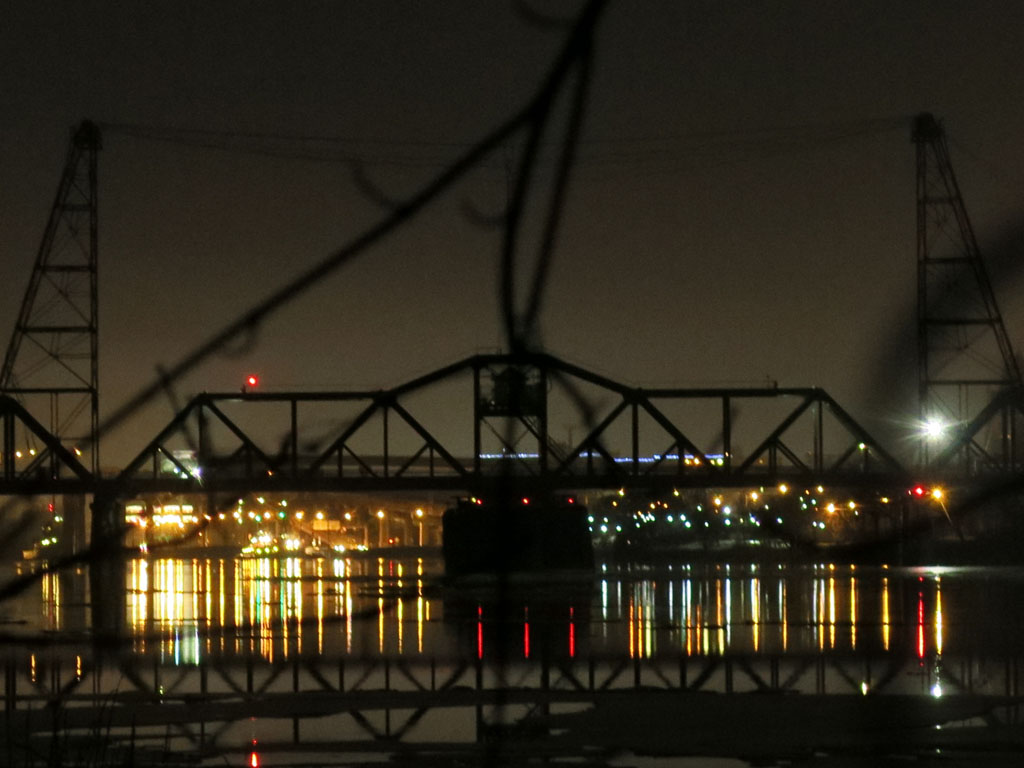
There are bridges, and then there are bridges with stories. The Livingston Avenue Bridge, a double-swing railroad span that stretches across the Hudson River between Albany and Rensselaer, belongs firmly in the second category. Built in 1902 and still operational today, this iron giant is one of the oldest surviving swing bridges in the United States — and standing beside it, watching its massive pivot sections rotate open to let river traffic pass, is one of those genuinely jaw-dropping Albany experiences that most visitors never even know to look for.
The bridge sits at the foot of Livingston Avenue on Albany’s eastern edge, where the city quietly meets the Hudson. It’s not tucked behind a velvet rope or advertised on a glossy billboard. You simply follow Livingston Avenue east until the road ends and the river opens up in front of you — and there it is, a sweeping lattice of steel stretching more than 900 feet across the water. On a clear morning, with the light coming off the Hudson and the green hills of Rensselaer County rising on the opposite bank, the scene is quietly spectacular.
What makes the Livingston Avenue Bridge remarkable is that it still works. Amtrak trains roll across it daily on the Empire Service route connecting New York City to Albany and beyond. Watching a train pass over a bridge that has been doing exactly this job for over 120 years gives you a vivid sense of continuity that even the best museum exhibit can’t quite replicate. And if the bridge happens to swing open while you’re there — rotating on its center pivot to create a gap for river traffic — consider yourself genuinely lucky. It’s a slow, almost theatrical movement, and it never gets old.
For photographers, the vantage points along the Albany shoreline here are underrated gold. The bridge reads beautifully in long exposures at dusk, when the last light catches the ironwork and the river goes glassy. Bring a wide-angle lens if you have one, because you’ll want the full span in frame.
This stretch of the riverfront is also peaceful in a way the busier parts of downtown Albany are not. You can walk along the water’s edge, watch the occasional barge move upstream, and feel the city slow down around you. There’s a reason locals come here on quiet evenings — it simply feels good to stand next to something that has been standing this long.
The Livingston Avenue Bridge doesn’t ask anything of you. There’s no admission fee, no scheduled tour, no gift shop. You just show up, look up, and let a piece of living American infrastructure do the rest. For a city with as much layered history as Albany, that kind of unfiltered, unhurried encounter is worth going out of your way to find.