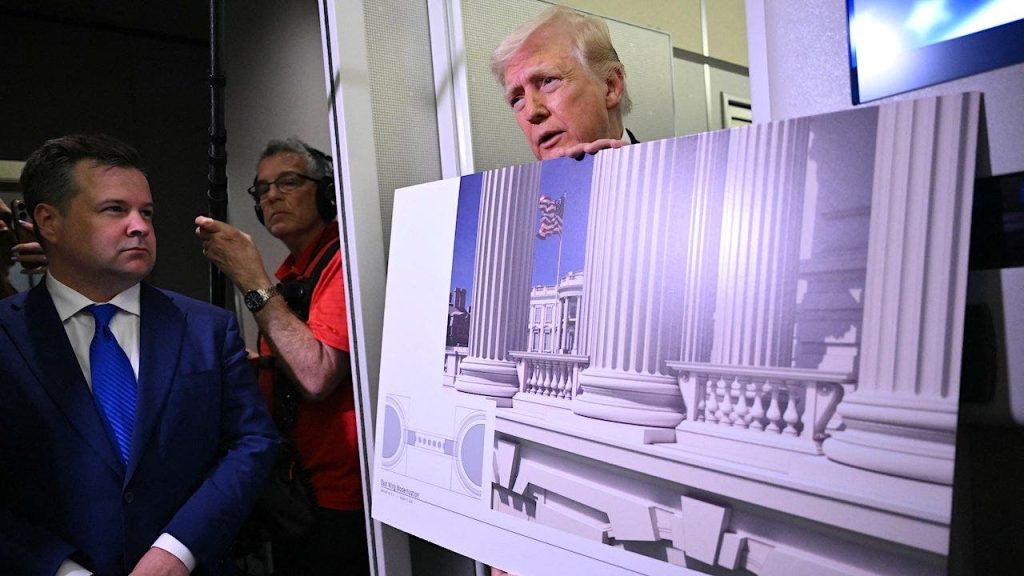
The Senate parliamentarian, Elizabeth MacDonough, blocked a $1 billion White House and Secret Service security line item tied to President Donald Trump’s planned ballroom, a move that reshapes Republican strategy in the Senate and forces fresh debate about security, stewardship and process in Washington. Senators from both parties weighed in, with Ryan Wrasse signaling a redraft and Democrats, led by Sen. Jeff Merkley and Senate Minority Leader Chuck Schumer, promising resistance. The dispute touches on budget rules, claims about private funding for the ballroom, and whether a security request can pass by simple majority as part of a larger immigration and enforcement package.
MacDonough, who has served as Senate parliamentarian since 2012, ruled the provision out under reconciliation rules, a technical but decisive interpretation that has been expected. Republicans see the ruling as a hurdle, not a dead end, and are preparing to refine the language to try to meet the Byrd Rule’s requirements. That process is familiar in the Senate, but it will require care and political capital if GOP leaders hope to keep the funding in a party-line package.
After the ruling, Ryan Wrasse, spokesman for Senate Majority Leader John Thune, R-S.D., posted a blunt message on X: “Redraft. Refine. Resubmit,” Wrasse wrote on X. The line signals what many Republicans expect: iterative drafting until the parliamentarian signs off or enough senators agree to push a different route. Party leaders are treating this like a normal step in reconciliation work, though Democrats are poised to contest changes.
Sen. Jeff Merkley, D-Ore., said the parliamentarian’s interpretation means the security money requires 60 votes under chamber rules, and Democrats are ready to fight any GOP workaround. From the Democratic perspective, the question is simple: taxpayers should not bankroll what critics call a partisan vanity project. Republicans, meanwhile, insist the request is about modernizing protective infrastructure at the White House after credible threats against the president.
Republican skeptics pressed the administration too, asking for more detail before approving a billion-dollar tab tied to a project that President Trump has said would be privately financed. Sen. John Curtis, R-Utah, captured the blunt reaction from some on his side: “You made that number up.” Members want a clear explanation of costs and plans before voting to spend public money on any White House construction or security upgrades.
The one-page breakdown that circulated in Washington split the $1 billion into three buckets: $220 million for “White House complex hardening,” $180 million for a visitor screening center, and $600 million for Secret Service training and counter-drone measures. Supporters argue those items are plain national security needs, from bulletproof glass to chemical detection systems and drone defenses. Opponents see the figures as inflated and say the administration has not justified how private and public funding intersect.
Sen. James Lankford, R-Okla., pushed back hard on the narrative that this is simply money for a ballroom, saying the portrayal is misleading. “What was clear today is this whole statement, ‘It’s a billion dollars for a ballroom.’ Anyone who prints that is printing something they know is a lie,” he said. That line reflects the GOP argument that framing the money as a ballroom subsidy misses the broader security rationale tied to protecting the president and visitors.
Still, Republican leaders and rank-and-file senators have not been unanimous; Sen. Todd Young said officials need to explain how they arrived at the figure, and Sen. Rick Scott demanded to know what taxpayers would get in return. That internal scrutiny matters because winning a narrow reconciliation fight depends on unity and credible justification. If the administration can’t show the math, the political price for congressional Republicans could rise.
Democrats have cast the project as tone-deaf and excessive, and Senate Minority Leader Chuck Schumer made no effort to soften his language. “The bottom line is, this ballroom is a disgrace,” he said. “The Republicans know it. Let’s see if they have the guts to do what they know is right, both substantively and politically, and tell Trump we don’t need a God — we don’t need a damn ballroom.”
The ballroom controversy sits atop a legal and practical fight. The East Wing demolition ordered by President Trump to make room for the new facility prompted a lawsuit from preservationists, and a federal appeals court allowed construction to continue while the case moves forward. Trump maintains the ballroom will be largely privately funded — he has said $400 million in donations will cover much of the cost and that the finished facility would serve future administrations as well — but the parliamentarian’s decision complicates any bid to tuck security money into a reconciliation bill passed with a simple majority.